WHAT’S COOKING: Boerewors: Vinegar, spice and everything nice
In 2019, when TGIFood was young, Louzel Lombard Steyn wrote this piece about boerewors as her first story for the then new food platform. She elected to write about boerewors, and the piece contains her treasured family recipe for it. We highlight the piece again today, while asking you to tell us who makes the best boeries in South Africa.
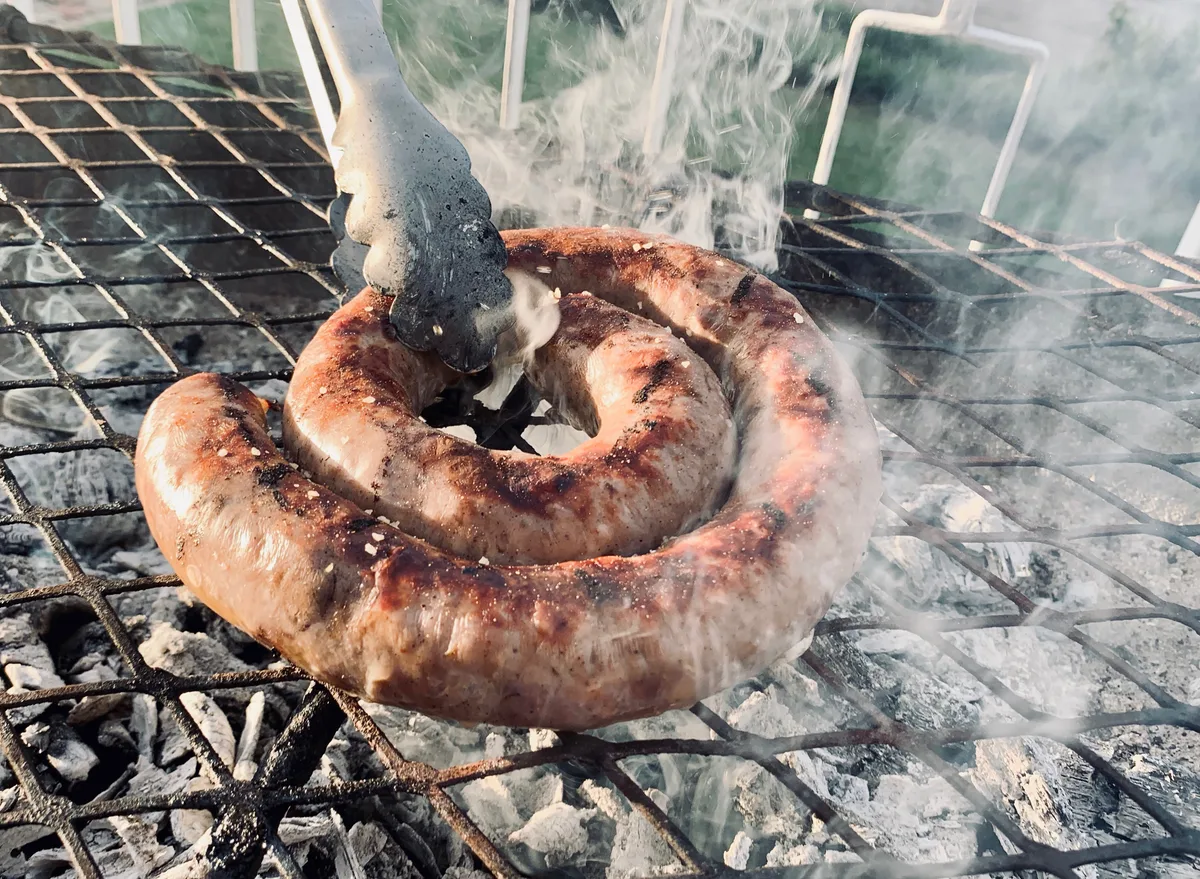
It’s solace in a bun. It’s what you trade for wine with your friends from Cape Town when they visit. It’s what you buy by the metre and eat sizzling hot off the flames at Mzoli’s in Gugulethu. It’s eaten with All Gold or chakalaka or smoor . It’s an ode to our collective history as a nation. It’s spicy, fatty, succulent boerewors.
I grew up on an Angora goat farm in the Midlands Karoo and farm-to-table living has always been the norm. Since I was tall enough to see over the kitchen table, I’ve been taught and trusted with food processing – from tomatoes and apricots in summer, to venison and other meats in winter.
Like a meat-filled thread connecting the dots of our combined pasts, boerewors nods to our colonial influences but celebrates the ingenuity of the first people who put together this unique blend of beef, fat, coriander seeds and vinegar.
So highly considered is the boerewors here that the Health Department set out regulations in 1990 to determine what can – and cannot – be classified as the “real makoya”. It reads like Biblical scripture... and so it should.
“Boerewors shall be manufactured from a mixture of the meat of two or more animal species [including beef, goat, sheep and pork] and shall be contained in an edible casing. It shall contain a minimum of 90% total meat content and not more than 30% fat content. There shall contain no offal except where such offal is to be used solely as the casing of the raw boerewors. It shall contain no mechanically recovered meat,” among other things.
When you’re buying or selling Boerewors TM in South Africa, you’re not playing around.
My mother, Lani, says it’s excessive. She’s been living on the farm in the Karoo for the past 35 years and not a week goes by where she doesn’t make wors in our glorified farm “butchery”. My grandmother, Delene Lombard, taught her how and she, in turn, taught me.
“Boerewors started with real farmers utilising what they had. It is grounded in sustainable living and eating. Once a year during winter, a young ox and one pig would be slaughtered for the pot.”
Cattle were and are farmers’ livelihood in more ways than one. It’s a big decision to slaughter an animal, and when you do, you dare not waste anything. In the old days, skins were used to make “ karosse ” or slippers. Bones were cooked to make gelatinous sult or brawn, often curried to keep longer. Even the intestines were used... which brings me back to boerewors.
Washed and cleaned until translucent, intestinal tubes served as the perfect casings for the spiced ground meat. “It was just another way to optimise usage from the product, wasting nothing,” mom says.
Making wors from scratch is, in fact, part of a whole series of processes starting with a whole product, say the young ox.
First, you have to break it down from prime to lesser cuts.
5News aggregated this summary from the outlet’s public feed. The full article, with all the context, is on www.dailymaverick.co.za — the content belongs to Daily Maverick.