Mining rights vs social licence — why trust is the ultimate currency

Mining rights secure access, social licence secures legitimacy; without trust, investments falter, communities fracture, reputations perish and livelihoods vanish altogether.
Andile Sangqu is Chair of Transnet and previously served for more than four years as Chair of Anglo-American South Africa. He is the founder of Ovid Consulting and delivered the 2024 Marikana commemoration address. He is currently assisting Sibanye-Stillwater’s Marikana Operations.
Every mining executive knows how to secure a mining right. It may take more time than he or she would like, but there is a process to be followed.
Across South Africa, billions of rands in mining investment depend not only on licences issued by the government, but on legitimacy granted by employees, communities and other stakeholders.
Yet despite sophisticated stakeholder engagement plans, detailed social performance standards and ever-expanding ESG disclosures, conflicts between mines and communities continue to erupt with alarming regularity.
The uncomfortable truth is that many companies still confuse engagement with trust.
Mining remains central to economic activity and employment, yet many communities surrounding mines continue to face unemployment, weak public services and limited economic alternatives. Jim Cooney, a Canadian mining executive, first used the term “social licence to operate” in the late 1990s to describe the informal but consequential permission that companies require from the societies in which they operate.
A statutory mining right is necessary, but it is not sufficient. The social licence to operate is neither permanent nor unconditional. It is earned through conduct and renewed through experience.
The essential feature of that conduct is the building of trust, which is a precondition for earning the social license to operate. When in place, the social licence and trust are mutually reinforcing.
And that is why a trusting relationship with stakeholders is good for business. When it weakens, the consequences are visible in disrupted production, delayed capital, management distraction, damaged reputation and, in the most serious circumstances, lasting human harm. When trust is strong, those risks are reduced and productivity and other outcomes may improve through enhanced collaboration and cooperation between the company and its stakeholders.
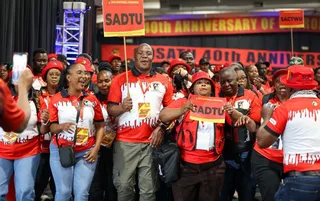
The events of 16 August 2012 at Marikana permanently changed the moral and strategic context in which mining companies engage labour, communities, and the state.
5News aggregated this summary from the outlet’s public feed. The full article, with all the context, is on www.dailymaverick.co.za — the content belongs to Daily Maverick.