Chinese carmakers step up pressure on European rivals at Paris Motor Show
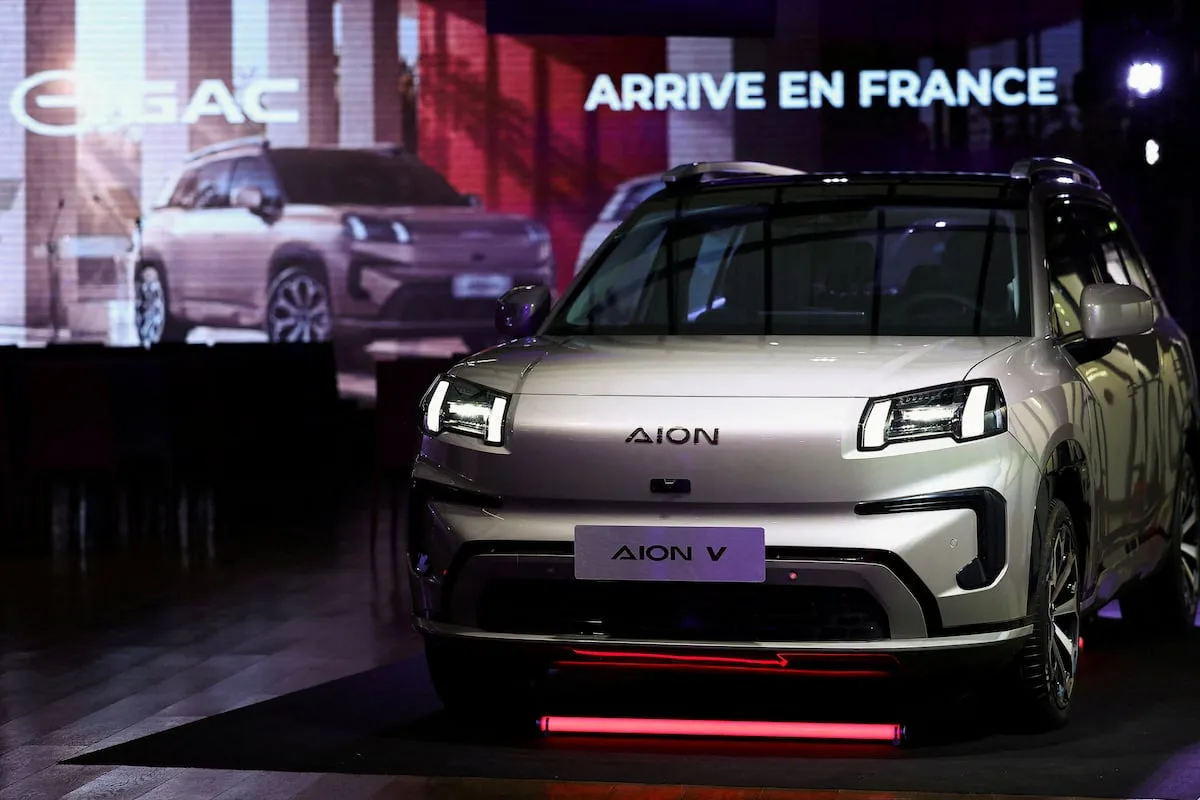
A record 20 Chinese car brands will descend on next week’s Paris Motor Show, underscoring how rapidly China’s carmakers have established themselves as a competitive threat in Europe despite mounting trade barriers.
European carmakers will use the show to unveil new models and try to reassure investors they can compete, as Chinese rivals gain market share with a growing range of electric vehicles and hybrids.
This year’s Chinese contingent will be twice the size of the one at the last show in 2024, with established names such as BYD and Chery joined by newcomers including Aito and Avatr.
The Paris Motor Show comes at a pivotal moment for Europe’s auto industry. Sales by European manufacturers in China have slumped since the Covid-19 pandemic, while Chinese carmakers, largely shut out of the US and facing weaker demand at home, have increasingly turned their attention to Europe.
“The Chinese are saying ‘we’ve got to try and dominate Europe because we can’t do anything in the US’,” said Brad Kunz, a partner at consultancy Grant Thornton Stax. “If the US had allowed Chinese carmakers in, Europe ... wouldn’t be so much of a battleground.”
Data from Schmidt Automotive Research show Chinese brands held a 10.7% share of the European market in the second quarter, up from 5.7% a year earlier and above Japanese rivals who arrived in Europe in the 1970s.
Pressure from Chinese competition, alongside weak European demand, US tariffs and the costs of electrification, is starting to tell on European carmakers.
Volkswagen is cutting thousands of jobs and considering factory closures to slash costs, while luxury rival BMW is also shedding thousands of workers.
The EU imposed tariffs on Chinese-made fully electric cars two years ago, but Chinese carmakers have responded by expanding into combustion-engine models and plug-in hybrids. Chinese brands accounted for more than 26% of the Western European plug-in hybrid market in the second quarter, up from just 2.2% in the same period two years earlier.
Europe’s car industry is now pushing for tariffs on Chinese plug-in hybrids, while the EU is working on legislation that will include “Made in Europe” provisions requiring minimum local content levels for EVs to qualify for key subsidies or government contracts.
While battling Chinese rivals for market share, European carmakers are also seeking to benefit from their rise by selling them capacity at underutilised factories and tapping into their EV technology. Stellantis, for example, has partnered with China’s state-owned Dongfeng.
“The Europeans are playing a sort of double game,” said Pedro Pacheco, vice-president of research at Gartner.
Chinese carmakers have emerged as formidable competitors in EV technology, but European manufacturers are seeking to fight back with a new generation of more affordable electric models.
“This motor show will probably be the most important one in the region since the pandemic,” said automotive analyst Felipe Munoz. “This is the platform the Europeans are using to tell the Chinese they’re still strong and still ready.”
5News aggregated this summary from the outlet’s public feed. The full article, with all the context, is on www.timeslive.co.za — the content belongs to TimesLIVE.