CLARENCE TSHITEREKE | How SA’s high-grade rare earths could fuel economic renewal
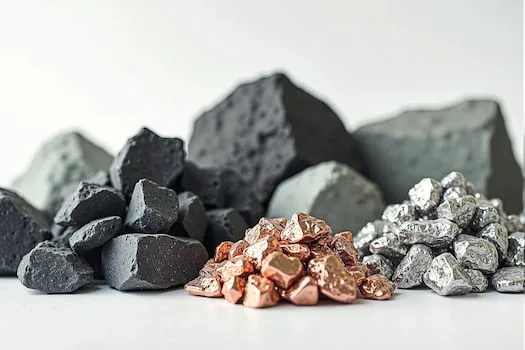
In the heart of the Western Cape, the Steenkampskraal monazite mine is redefining the global rare earth element supply landscape.
As the world pivots towards a digital, low-carbon future, demand for rare earths — critical to smartphones, wind turbines, electric vehicles (EVs), defence systems and space technologies — has never been more acute.
Through Steenkampskraal, South Africa is poised to meet strategic domestic needs while emerging as a credible international supplier that challenges traditional dominance and advances resource-driven development.
Steenkampskraal’s significance lies first in the extraordinary grade of its deposit. With an in-situ total rare earth oxide grade of about 14.5% in the run-of-mine feedstock, total proven and probable reserves in thousands of tonnes, it is recognised as the highest-grade rare earth resource in the world. By contrast, China’s Bayan Obo, the world’s largest rare earth mine by contained resource, operates at an average grade of only 3%–6% total rare earth oxide.
Comparable deposits, including Mount Weld mine in Australia (4.12%) and Malawi’s Kangankunde Rare Earth Project (2.2%), have lower grades. As a result, Steenkampskraal can deliver significant output from smaller mining volumes, lowering environmental impact and capital requirements while increasing value per tonne of ore.
Steenkampskraal’s product suite is well suited to the digital and green economy. It will produce rare earths such as neodymium, praseodymium, dysprosium and terbium — elements vital to high-performance permanent magnets used in wind turbines, EVs, advanced manufacturing and clean energy systems.
The International Energy Agency says global demand for these four rare earth elements was 59 kilotonnes in 2022 and is projected to reach 176 kilotonnes by 2035. For perspective, the current spot price of terbium is $1,180/kg — about R20,000 at today’s exchange rate.
Europe’s demand is set to accelerate as the EU scales wind power, electric mobility, digital infrastructure, space and defence industries under its critical raw materials agenda. In the US, demand is driven by net-zero industrial policy, electrified transport, offshore wind, artificial intelligence infrastructure and defence procurement.
Asia will remain the largest demand centre, led by China’s magnets, EV, electronics, robotics and renewable-energy manufacturing base, with Japan, South Korea and India expanding strategic procurement.
Commercial forecasts placed the global rare earth elements market at about $3.88bn–$3.95bn in 2024, rising to $6.28bn by 2030 and $10.42bn by 2035. Permanent magnets remain the value driver, placing Steenkampskraal’s high-grade magnet rare earth basket at the centre of a tightening global market.
For South Africa this creates an opportunity to capture far greater value than raw mineral exports alone.
5News aggregated this summary from the outlet’s public feed. The full article, with all the context, is on www.businesslive.co.za — the content belongs to Business Day.