ASHLEY NYIKO MABASA | Is SA ready to lead Africa’s digital revolution?
South Africa has a narrow but valuable opening in the next phase of the digital economy .
The country could become Africa’s preferred platform for cloud computing, artificial intelligence (AI) and enterprise data services.
Globally, there are 12,000-13,000 data centres. South Africa has about 56 with a combined capacity of about 350MW.
That gives it a base to build from. It also exposes the problem: in the AI era, data centres are not only technology assets, they are also power assets.
The numbers are compelling. South Africa’s AI data centre market is projected to expand from $78.9m (R1.26bn) in 2025 to S$483.5m by 2030, an annual growth rate of 43.7%.
Africa’s per capita data centre electricity consumption is below 1kWh today, but it is expected to double by the end of the decade as cloud adoption and sovereign AI projects scale. For investors, that is a growth story. For policymakers, it is a grid-planning test.
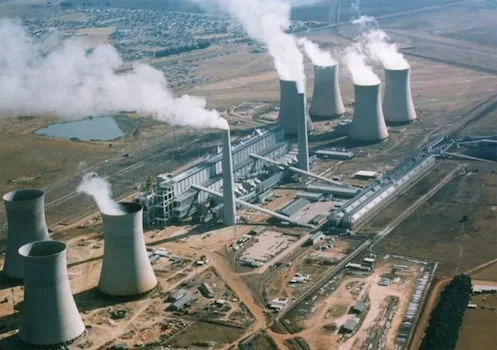
The bottleneck is no longer primarily digital. It is physical. Demand for cloud services and colocation capacity is rising faster than the electricity, land, cooling and grid connections needed to sustain it.
The Development Bank of Southern Africa expects installed data-centre capacity to rise from 435MW in 2024 to 829MW in 2029, a compound annual growth rate of 17.5%. That is an opportunity. It is also a warning label.
Modern data centres consume electricity at an industrial scale. In South Africa, estimated requirements have climbed to between 80MW and 160MW per facility, while larger campuses are being designed to support more than 200MW of consumer and enterprise IT workloads.
The International Energy Agency has noted a typical AI-focused data centre can use as much electricity as 100,000 households, while the largest facilities being built globally may consume 20 times that amount.
That is why Eskom’s claim of surplus generation matters. Chair Mteto Nyati has said the utility is in talks with Amazon, Microsoft and Google. If those discussions lead to investment, they will show global technology groups are again willing to test South Africa’s ability to host energy-intensive digital infrastructure.
The country should welcome the interest. It should not mistake it for certainty.
The risk is concentration. A cluster of large data centres in the same industrial zone can create a sudden demand shock on the local grid, absorbing available capacity and forcing accelerated investment in substations, transmission lines and generation.
If planning is weak, those costs can end up in electricity tariffs, eroding the very competitiveness South Africa is trying to sell.
5News aggregated this summary from the outlet’s public feed. The full article, with all the context, is on www.sowetanlive.co.za — the content belongs to Sowetan.