Future disconnect: The digital divide in SA’s energy minerals boom
The minerals that keep the world’s digital infrastructure running are extracted from communities where many young people still struggle to access reliable internet. Sakhile Dube investigates
For many young people in the mining towns of North West province, employment opportunities via internet access remain out of reach. Yet these are the places where the minerals needed to power every search query, artificial intelligence (AI) prompt and cloud upload are extracted.
Among these minerals are platinum group metals (PMGs) mined in communities like Marikana and Kroondal. South Africa holds the world’s largest known PGM reserves, accounting for about 88% of the global supply, according to the Department of Mineral and Petroleum Resources.
The most important PGMs in this chain are platinum, palladium, ruthenium and iridium, which have become central to the clean energy transition, supporting systems that power data centres, the physical infrastructure behind the cloud, the internet and AI.
Most of the towns’ digital infrastructure sits far from the mines, with investment programmes going to places that already have good connectivity. The communities where the minerals for this infrastructure are mined say they are left out, with no help to ensure that they share in the benefits of digital development.
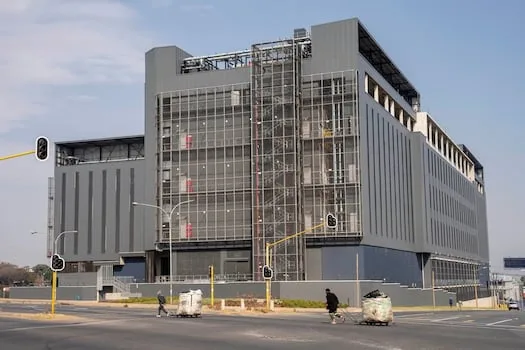
Teraco, which is owned by the American firm Digital Realty, has a campus in Johannesburg that is South Africa’s largest data centre. Its communications department told Oxpeckers that its community investment programmes are directed at the areas where it operates – Johannesburg, Cape Town and Durban – rather than mining communities in the North West.
But many of these cities already benefit from extensive fibre infrastructure and reliable mobile connectivity. By contrast, communities living in Marikana and Kroondal continue to rely largely on LTE networks with limited fibre rollout.
Data centres are expanding rapidly globally and in South Africa, with more than 50 already in operation, mostly in Johannesburg and Cape Town, and new ones are being built to meet the growing digital demand.
These centres are among the country’s fastest-growing energy users, with a combined capacity of 350 megawatts – which is less than 1% of the global total. According to the International Energy Agency, global data centre energy consumption could double by 2030, and local data centres are already feeling the pressure of resource constraints.
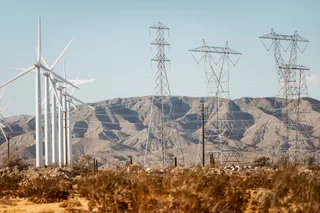
To secure more reliable and low-carbon energy sources, they are turning to renewable options, testing or investing in hydrogen fuel cells and backup systems that support solar, wind and other clean technologies.
As South Africa’s digital economy expands, demand for PGMs in clean energy systems grows, highlighting a deeper dependence on the communities where these minerals are mined.
The same critical minerals extracted from the North West are central to South Africa’s Just Energy Transition (JET).
5News aggregated this summary from the outlet’s public feed. The full article, with all the context, is on www.businesslive.co.za — the content belongs to Business Day.