The R197-billion market the banks can’t reach
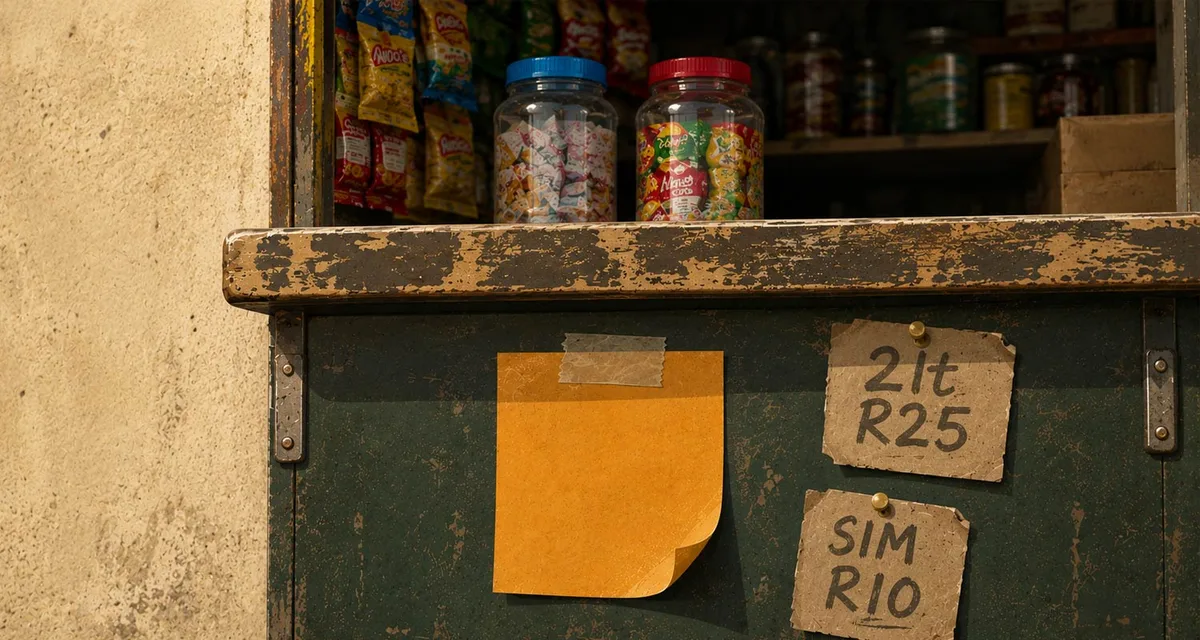
South Africa’s financial inclusion conversation is stuck in the wrong year. The account access gap is largely closed: 84% of adults hold accounts. But the gap that will decide who captures the next layer of value in the informal economy sits somewhere else entirely, below the ATM, and nobody owns it – yet.
The Reserve Bank set out the access-versus-use problem in a July 2026 working paper. Depending on the dataset, between 80% and 84% of adults hold an account, and fewer than 76% use one in any given month. FinScope 2023 found 71% of adults paying for food and groceries mainly in cash. Roughly 14 million grant recipients, 76% of the total, withdraw the full benefit the day it lands. The account gets people as far as the ATM and no further.
The usual answer is product improvement – lower fees, lighter onboarding, better design – on the assumption that dormant account holders are dormant because the product has failed them. That misreads it. A spaza owner who takes only cash is not expressing a preference. His customers pay in notes, his wholesaler wants notes, and no amount of redesign to the account changes the circuit he trades in.
What is not digitised is the last metre of the payment stack: the till in the informal economy. It’s not for want of trying. Yoco has more than 200 000 merchants and processes over US$1-billion/year, which is a real business and still barely scratches an informal economy of a different order.
Trade Intelligence puts informal FMCG retail at R184-billion to R197-billion/year. Nielsen’s outlet survey counts about 100 000 spaza shops; Trade Intelligence and Tiger Brands’ own market targeting put it closer to 130 000 to 150 000. The average shop turns over somewhere between R1.3-million and R1.9-million. Whichever end of those ranges you take, the informal merchant base is several times bigger in transaction value than everything Yoco has built in a decade.
Cash is not free. The Reserve Bank’s Cost of Cash Study, concluded in November 2025, put the annual cost of managing it at R90-billion, most of it generated at the informal layer – ATM queues, cash-in-transit routes, shops where the till is a tin. Notes and coin in circulation have grown 0.5%/year over the past three years, against a historical average of 11.3%. The formal economy is digitising; the informal one is not.
The Reserve Bank’s draft authorisation framework, out for consultation since November 2025, has been read mostly for what it means for fintech and remittance costs. The more interesting question is what it does at the last metre. Its purpose clause is blunt about the old position: non-banks could not hold client funds without either a sponsorship arrangement with a licensed bank or a third-party payment provider registration.
The framework replaces that with an activity-based authorisation any non-bank can apply for, with the Reserve Bank rather than a sponsoring bank as the counterparty – the opening of the national payment system the central bank has been signalling since 2024.
Sponsorship does not vanish.
5News aggregated this summary from the outlet’s public feed. The full article, with all the context, is on techcentral.co.za — the content belongs to TechCentral.