How Dolly Parton turned her ‘plastic’ image into authentic artistry
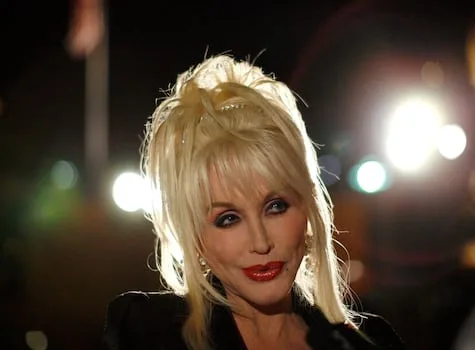
Scrolling through the tributes to Dolly Parton ― from the Grand Ole Opry, New York mayor Zohran Mamdani, queerfluencers and others ― I thought to myself: that’s her real name?
Yes. The “Queen of Country”, who died aged 80 on Tuesday, was born Dolly Rebecca Parton. My surprise at the authenticity of her name says something about the contradiction within the figure of Dolly.
A sometime figure of ridicule and satire, the opening image of Dolly — in interviews, send-ups and even her own branding — was often related to her apparent “fakeness”.
Her literal figure ― breasts, face, hair ― was obviously artificial. And often these synthetic additions to her body were transposed into an assumption she herself was, if not inauthentic, at least somewhat superficial. Dolly’s first hit on the country charts was Dumb Blonde in 1967.
But what a name! Not a diminutive of a serious name, not a stage name, but a real name that moves us towards her celebrity image as one: dressed-up, made-up, an object with which the entertainment industry played.
But the fact it is her true name pushes us into the performative savviness with which Dolly herself played . Her blondeness became a trademark, as did her pride and tongue-in-cheek irreverence for her “plastic” image.
In the same year as Dumb Blonde charted, she released her first LP, Hello, I’m Dolly . This potentially self-conscious insertion of agency (I am) into a familiar 1960s musical title ( Hello Dolly ) might point us to an early positioning of herself as a “Dolly”.
In a genre where (apparent) sincerity is paramount — the top-charting country song in her debut year was the conventionally sentimental All the Time by Charles Greene — Dolly made artifice her signature.
Again, we have a contradiction. To be fake, to push into the sentimental performative aspects of the country genre, became her true autograph — a trace of Dolly’s originality .
Of course, the sincerity of country music, or any form of popular music, is arguably spurious. But in the late 1960s, with the rise of experimental rock, folk-poet pop and even Motown, country’s claim to speak from an authentic position was a selling point, particularly for conservative audiences.
Consider the psychedelic country of the Flying Burrito Brothers and The Byrds erupting from the American West Coast at the time.
Their entrée to the Grand Ole Opry, a live country-music radio broadcast, was foiled, not only due to the louche behaviour of Gram Parsons and Chris Hillman, but also because the doyennes of Nashville recognised something of a send-up in their pitch-perfect performances of the country style.
Instead, Dolly was welcomed into the country fold. Her backstory and roots affirmed an authentic and marketable country commodity. Unlike most of her contemporaries, she wrote original hits.
Yodelling through the 1970s, Dolly worked the country circuit with the song Jolene breaking into the mainstream in 1974. But in the 1980s, with her rise as a film star and fixture in entertainment media, Dolly began to seriously play with the dynamic between real and fake.
5News aggregated this summary from the outlet’s public feed. The full article, with all the context, is on www.businesslive.co.za — the content belongs to Business Day.