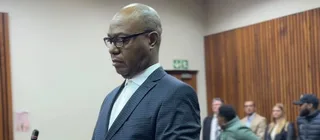
Is Dr Ndlozi's one-man manifesto a genuine call for change or an abandonment of true revolutionary thought?
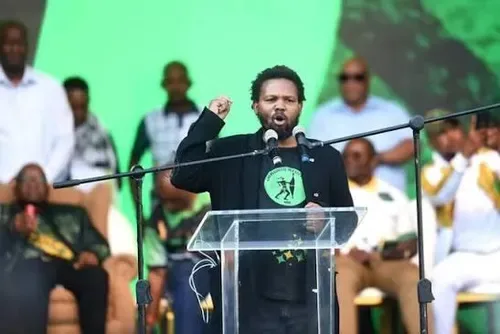
ANDILE MNGXITAMA Dr Ndlozi's newly unveiled manifesto promises radical change, yet critics such as Andile Mngxitama question whether it is a retreat into liberalism, echoing past political failures and overlooking the essential role of state power in achieving true transformation.
Dr Mbuyiseni Ndlozi, the former parliamentarian turned podcaster, has with great aplomb announced his one-man manifesto of supposed radical change.
This idea seems to be a desperate copying of some newly announced initiatives by the likes of Advocate Muzi Sikhakhane and Jacinta Ngobese. Both initiatives, with varying degrees of success, appeal to societal engagement with the political without being overtly political. These proposals seem to be a product of disillusionment with formal politics, which has not transformed society since 1994.
The Wits university graduate borrows the celebrated Karl Marx's "Theses on Feuerbach" of 1845, without acknowledging the source of yet another borrowed idea. Bereft of any new contribution, the good doctor continues to present his vacuous intervention as if it is a novel idea. Dr Ndlozi has given up on the revolutionary project and has latched onto the liberal NGO-isation of resistance, hoping it will bring about structural change.
But South Africa has been there in the post-1994 era already. A bit of basic research would have demonstrated the proven futility of the "help mekaar" politics already attempted.
The zenith of post-1994 social movements was around 2002. Under the rubric of "Social Movements United" (SMU), constituted by international NGOs and backed by South African social movements such as the Anti-Privatisation Forum (APF), the Landless People's Movement (LPM), Cape Town's Anti-Eviction Campaign (AEC), and Durban's Concerned Citizens Forum (CCF) — some twenty thousand marchers mobilised from Alexandra township to the seat of the WSSD at the heart of white capital in Sandton.
For a moment, civil society showed its strength. What happened to those movements is a great lesson in the politics of change and effective organisational form. These movements were spawned by the effects of Thabo Mbeki's neoliberal assault on the poor with his GEAR macroeconomic policy. GEAR commodified social goods like water and electricity, and resisted land redistribution despite holding the gift of a two-thirds majority, which permitted amendments to the constitution.
These efforts and their failures confirm the ineffectiveness of anti-state politics already attempted by the Afrikaner community. Faced with poverty, the Afrikaners tried outside-the-state civil society initiatives. They called these efforts "help mekaar." These efforts didn't end white poverty. It was only with the 1948 grabbing of state power that white poverty was defeated. The Afrikaner used state power ruthlessly to advance the white agenda.
Theoretically, global thought had also gone through the same cycle. At one point, the thinking of John Holloway, with his influential book Change the World Without Taking Power, dominated political thought and action. In this direction, the Mexican social movement, the Zapatistas, was presented as a living example.
5News aggregated this summary from the outlet’s public feed. The full article, with all the context, is on iol.co.za — the content belongs to IOL.