TOM EATON | Joburgers may flee in droves, but South Africa’s future still lies with the city
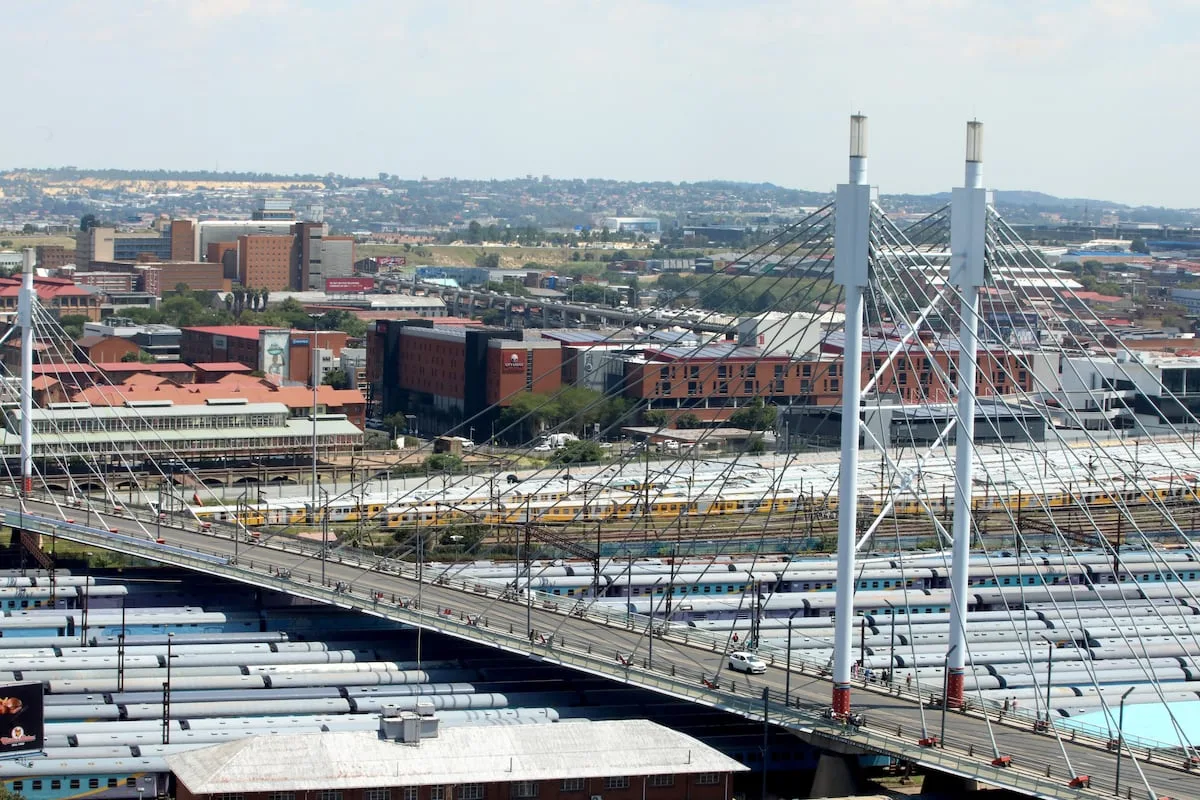
With an outright majority in Johannesburg out of reach for every party contesting next month’s local government elections, beleaguered residents have reason to worry. But they are no longer alone in their concern.
For context, things might change. Johannesburg celebrated its 140th birthday this week, a solid achievement for a small mining camp in the middle of nowhere, but barely a single season in the lives of many cities.
Diyarbakir in Turkey has been continually inhabited for 10,000 years. In the context of humanity’s permanent settlements, Johannesburg might as well still be a cluster of tents next to a muddy hole.
In other words, we can’t write off Johannesburg, just as we can’t pronounce that it will be transformed into a home for all. Cities rise and fall, but some fall only to rise again, and on and on.
In the short term, however, by which I mean the next decade or two, Johannesburg’s prognosis doesn’t look good.
The reasons have been discussed ad nauseam, from the logjam of coalitions with their professional spoilers and petty kingmakers to the Gordian knot of a city where public departments, quasi-governmental entities and private companies carve up the city into a myriad fiefdoms, each with their own middlemen and Byzantine administrations.
Readers of this column will also know that I have my own theory, namely, that Johannesburg is almost unique in South Africa — and fairly rare in the world — in that it is a city to which people move without wanting to grow old or die in it.
The tents and muddy boardwalks might have been replaced with skyscrapers and suburbs, but in many ways Johannesburg is still a place for fortune-seekers: a diverse, raucous, energised place whose transitory inhabitants, prospectors all, have no vested interest in securing its future.
Understandably, the prospect of more rancorous coalition brinkmanship in Johannesburg is a grim one for many residents.
We’re already seeing the likes of March and March exploit the frustrations and fears of South Africans largely abandoned by their leaders, and if Johannesburg continues its slide it’s likely that we’ll see the power vacuum increasingly contested by cynical — and possibly much more radical — players.
But this is far more than a Johannesburg problem. Just as the city has shaped the history of the rest of the country, with the discovery of gold wrenching our colonial history in directions that ultimately led to Union and then a republic within the current borders, continued dysfunction will send ever stronger ripples of instability through the rest of South Africa.
A failing Johannesburg, led by impotent or paralysed coalitions, is fertile ground for populism.
5News aggregated this summary from the outlet’s public feed. The full article, with all the context, is on www.timeslive.co.za — the content belongs to TimesLIVE.