STEPHEN MOORE | Private investment will give more South Africans reliable water
South Africa does not have the luxury of being ideological about water.
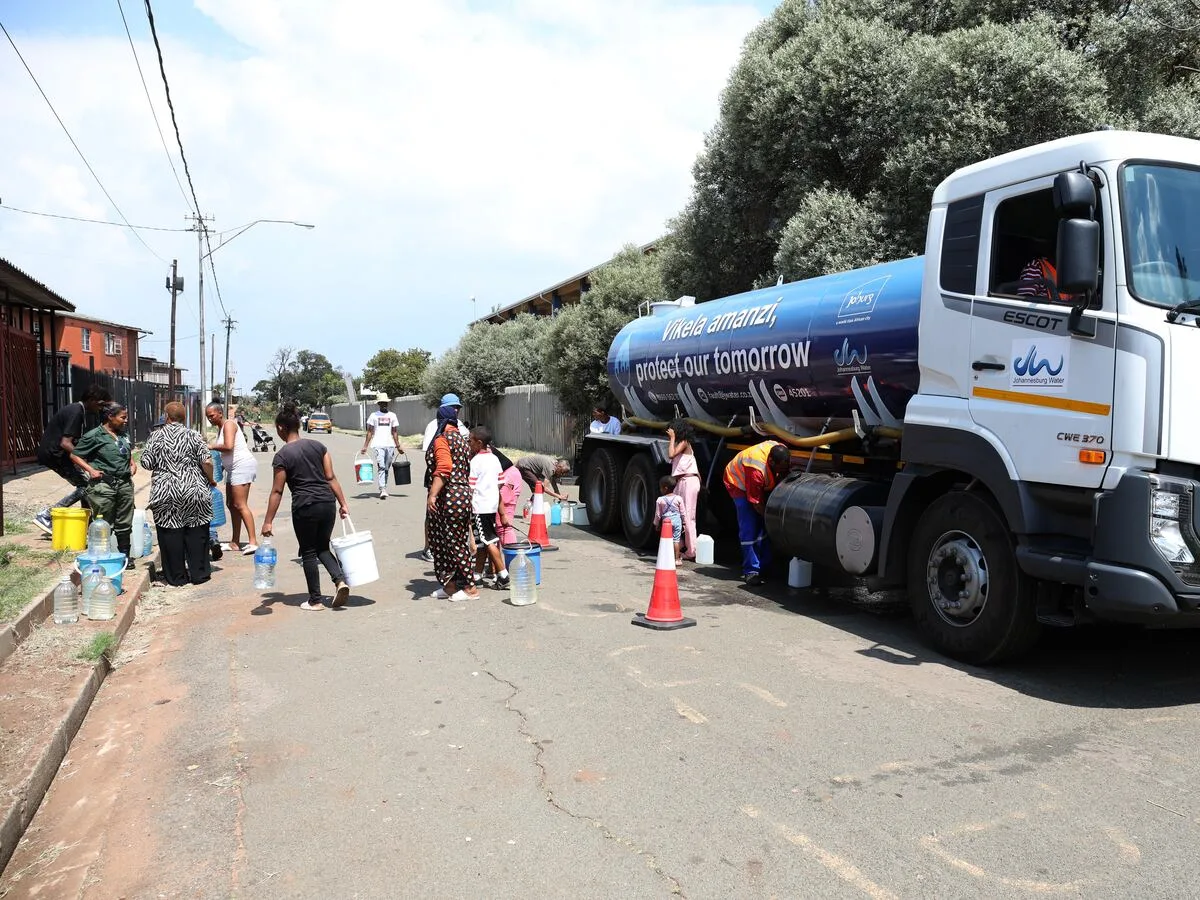
Across our country, communities have suffered prolonged outages, sewage pollution , collapsing wastewater treatment works, ageing pipes and a growing water tanker mafia. Almost half the water put through municipal systems is lost or goes unbilled.
Billions of litres of treated drinking water disappear through leaking pipes, while municipalities struggle to find the money to replace them.
Huge investment is required to rehabilitate and expand South Africa’s water and sanitation infrastructure as the backlog is in the hundreds of billions of rand.
There is an uncomfortable reality that we need to confront: government does not have the money to solve the water crisis on its own. Private investment is imperative to solve the water crisis.
Under partnerships with the private sector, water will remain in the state’s hands. Our laws are clear on that.
The private sector will be involved to finance, construct, operate and maintain infrastructure, which the state cannot do. That distinction matters.
For too long, any suggestion of private sector involvement in water has been brandished as full privatisation.
Our water crisis is nearing devastation. To stop this, public-private partnerships must be rolled out across the country.
A public-private partnership does not mean selling our water infrastructure or handing control to private companies. It means the government setting the rules, retaining regulatory authority and using private capital for technical expertise and operating capacity to deliver infrastructure and services that the state cannot provide.
Within the department of water and sanitation, there is a water partnerships office specifically to increase private-sector participation in municipal water and sanitation. Its work needs to be urgently scaled, considering the immensely high infrastructure backlog.
Public-private partnerships are therefore not a fringe proposal. They are increasingly becoming part of the government’s response to the scale of the crisis. However, much, much more needs to be done.
To disprove the privatisation myth, Siza Water has operated a water and wastewater concession on KwaZulu-Natal’s Dolphin Coast since 1999 under an agreement with what is now the iLembe district municipality.
The concession serves communities across a broad economic spectrum, from affluent areas around Ballito to lower-income communities. Its performance deserves attention.
5News aggregated this summary from the outlet’s public feed. The full article, with all the context, is on www.sowetanlive.co.za — the content belongs to Sowetan.