LUCKY MATHEBULA | Pussyfooting ANC’s mayoral choices will be a test of political renewal
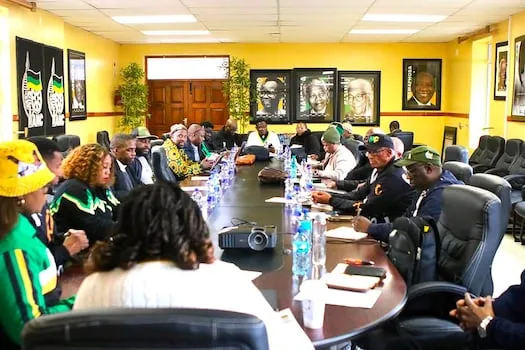
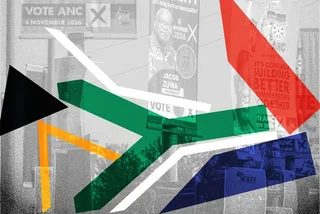
The much-anticipated announcement of the ANC’s mayoral candidates failed to meet the moment . Instead of presenting clear choices, the party unveiled shortlists and deferred final decisions . That hesitation matters. For all its electoral decline and accumulated failures of accountability, the ANC remains a benchmark against which South Africa measures political leadership. The standard it sets, whether elevated or diminished, continues to shape the wider political field.
The movement that helped imagine a non-racial, non-sexist, democratic, united and prosperous society inherited an exacting leadership tradition. The generation that negotiated the constitutional settlement did more than occupy office: it articulated a conception of public power anchored in dignity, equality and democratic responsibility. Those who inherit that tradition cannot treat leadership as a reward for organisational loyalty. They carry a higher burden, to demonstrate that political authority is a form of public trusteeship.
The ANC’s indecision therefore reveals more than a difficult personnel choice. It exposes the depth of fragmentation within its ranks and the extent to which factional vetoes have displaced institutional judgment.
A party that cannot choose its own public face risks appearing incapable of choosing a governing direction. In politics, postponement is rarely neutral: it redistributes power to organised minorities, entrenched interests and those most willing to threaten rupture.
This is especially consequential in South Africa’s emerging coalition order. Unlike the periods of sustained one-party dominance associated with the National Party after 1948 and the ANC after 1994, political authority is now increasingly dispersed among parties, factions, civic formations and independent actors. Each possesses some capacity to shape outcomes, but few possess enough power to determine them alone.
Leadership in this environment must negotiate without surrendering principle, build coalitions without normalising patronage and govern through institutions rather than personality.
A movement that governs by appeasing threatened defections eventually loses the ability to govern itself.
The mayoral question is consequently not a ceremonial one. Municipalities are where constitutional promises acquire, or fail to acquire, material form. Water, sanitation, electricity, roads, refuse removal, spatial planning and local economic development are not secondary administrative concerns; they are the everyday substance of citizenship.
A mayoral candidate must therefore be judged not only by factional acceptability or electoral appeal, but by administrative competence, ethical credibility, coalition-building capacity and a demonstrable understanding of the developmental state.
The fear that disappointed aspirants may contest as independents only deepens the diagnosis. If the possibility of defection can paralyse a national leadership, internal discipline has already been weakened by entitlement. Political commitment cannot be reduced to the expectation of deployment.
5News aggregated this summary from the outlet’s public feed. The full article, with all the context, is on www.timeslive.co.za — the content belongs to TimesLIVE.