HERITAGE AND RESTITUTION OP-ED: We walk to remember what apartheid erased of Newlands and Claremont
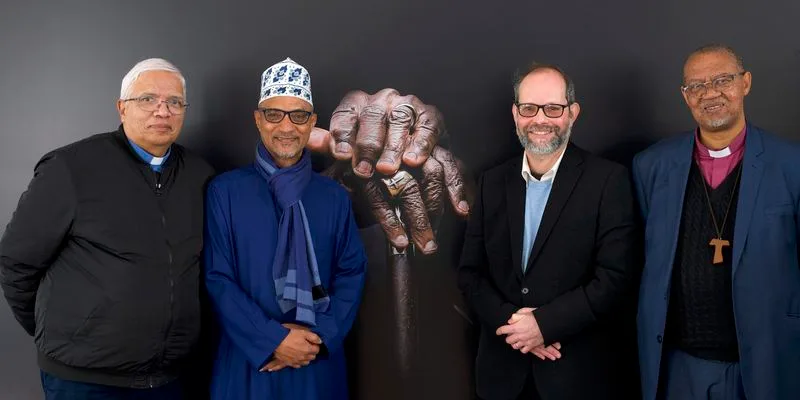
This Heritage Day, NCHERS undertakes its fifth Walk of Remembrance not as an exercise in nostalgia, but as a symbolic act of resistance against the slow violence of forgetting.
There is a temptation, on Heritage Day, to reduce our history to braais and bunting, a comfortable, sanitised celebration that costs us nothing and demands nothing. But for the families dispersed from Newlands and Claremont across the wind-blown expanse of the Cape Flats, heritage is neither comfortable nor abstract. It is the memory of a home from which they were torn, an ancestral landscape closer to the mountain that was declared, by the stroke of an apartheid bureaucrat’s pen, to be no longer theirs.
On Thursday, 24 September, the Newlands/Claremont Heritage, Environmental Justice and Restitution Society (NCHERS) will convene its fifth annual Walk of Remembrance through these streets. We walk because remembering is itself a form of resistance. The dispossession of Newlands and Claremont did not begin with the Group Areas Act; it reaches back to the 17th century, to the very foundations of colonial conquest at the Cape. But it was the apartheid forced removals of the 1960s that completed the work, emptying vibrant, mixed neighbourhoods of their people and scattering them to the periphery, out of sight of the leafy suburbs that rose in their place.
What was lost was not merely property. It was a way of living together. NCHERS was founded by two neighbouring houses of worship, St Saviour’s Anglican Church and the Claremont Main Road Masjid, precisely because they stand as living testimony to a community in which Christian and Muslim, and many others besides, lived in mutual coexistence. These sacred spaces are among the few remaining threads connecting the exiled to the homes they were forced to abandon. To this day, many who can no longer live in the area still travel back to worship here, drawn to the last tangible fragment of a stolen belonging.
In the Qur’an we are taught that God made us into nations and tribes that we might come to recognise and know one another (49:13), that diversity is a divine intention, not a problem to be engineered away. Apartheid’s spatial planning was, at its core, a theological heresy as much as a political crime: it declared that people created to know one another must instead be separated, ranked and removed. Our walk is a quiet repudiation of that lie.
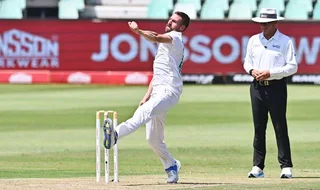
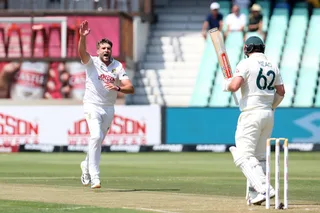
This year we begin at the Newlands Cricket Ground and follow a route marked by three stops, each a wound and each a testimony. At Draper Square, off Main Road, former residents will recall the families and institutions that once filled that space, Talfalah Primary School, the Orpheum Bioscope, the ordinary infrastructure of a community that dared to flourish.
5News aggregated this summary from the outlet’s public feed. The full article, with all the context, is on www.dailymaverick.co.za — the content belongs to Daily Maverick.