THE CONVERSATION: SA scientists decode cancer’s ‘cloak of invisibility’ in ‘major leap forward’
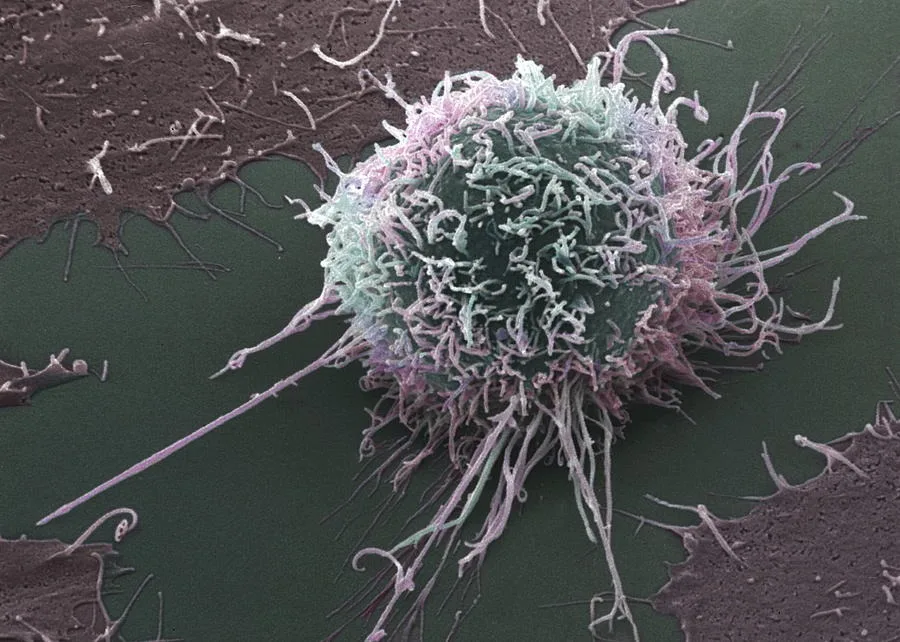
A team at the University of Cape Town has successfully recreated and modelled the process by which tumours bypass the body’s natural defences.
In the intricate biology of the human body, organs such as the breast, colon and lungs are lined with a defensive barrier known as the epithelium. At the heart of this barrier sits a remarkable protein called mucin-1 (MUC1). In a healthy body, MUC1 is like a sentinel.
It stands on the cell wall, draped in a complex “armour” of long chains of sugar molecules (carbohydrates), where it serves as a physical shield against bacteria, viruses and toxins. Crucially, it communicates with the immune system, telling the body’s natural defences when it is under threat.
But in the case of cancer, this guardian exchanges its sugar coat armour for shorter sugar chains and so turns into a traitor. It stops sending danger signals to the immune system and instead binds to the immune cells, creating an anti-inflammatory microenvironment that promotes tumours .
The team I lead at the Scientific Computing Research Unit at the University of Cape Town is home to computer modelling experts and experimental chemical biology research scientists. The molecular details of this MUC1 alteration, which contributes to the transformation of normal cells into tumour cells, were recently published in Nature Communications and provide a new look at exactly how this process happens.
By developing a novel “test-tube” synthetic biology approach, we modelled and decoded the molecular assembly line reorganisation that allows cancer to “redecorate” MUC1, turning it from a protective shield into a cloak of invisibility. We used our own computational chemistry algorithms to map the exact sugar coating positions that create a tumour-promoting environment.
Understanding the location and nature of the MUC1 sugars that prevent the immune system from detecting tumours provides the foundation for our laboratory and others in the field to develop cancer vaccines, biomarkers and therapeutics.
This South African-led discovery represents a major leap forward in our ability to decode one of cancer’s most effective survival strategies.
In a normal cell, the sugar molecules attached to MUC1 are long and complex. The process of attaching sugars is called glycosylation. In cancer cells, however, this process goes haywire. The sugar molecules are often cut short or altered, creating “aberrant” structures like the Tn and sialyl-Tn (sTn) antigens.
5News aggregated this summary from the outlet’s public feed. The full article, with all the context, is on www.dailymaverick.co.za — the content belongs to Daily Maverick.