Illicit goods: An existential threat to the South African economy
Illicit trade is not just an economic issue; it's a crisis that threatens jobs, public safety, and the future of South Africa.
The trade in illicit goods is destroying the country’s manufacturing economy, and robbing treasury of critical tax income.
As SA bleeds jobs and factories close, strategic interventions are vital if we are to rescue the sector at the 11th hour.
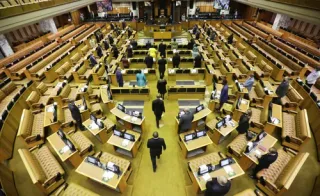
South African Finance Minister Enoch Godongwana made a remarkable admission during his budget speech to parliament early this year.
“The scourge of illicit trade threatens our economy,” he said. “It endangers consumers, and robs the fiscus of billions in revenue.”
As proof of this existential threat, Godongwana cited recent news that a major South African tobacco company was poised to close its last manufacturing facility in the country, at the cost of around 230 jobs in the Heidelberg area.
“The sophisticated and organised nature of illicit operations demands an intensified effort to curb this trade, secure prosecutions and dismantle its supply chains,” continued Godongwana during his speech.
Counterfeit goods – only one component of illicit trade – are a significant drain on the international economy, and recent OECD data indicates that they account for around $467 billion in global trade flows.
“Illicit trade threatens public safety, undermines intellectual property rights and hampers economic growth,” says OECD secretary-general Mathias Cormann. “The risks could increase as counterfeiters leverage new technologies and techniques to avoid detection.”
South Africa suffers massive economic impacts from the trade in illicit goods. In a presentation to parliament earlier this year, former Sars Commissioner Edward Kieswetter estimated that South Africa’s entire illicit economy could now be worth anything between R800bn and R1,2-trillion
Kieswetter estimated that in the past 15 to 20 years, the illicit economy had grown faster than the formal economy – from about 5% of GDP to about 12%-15%.
He believes this translates into R200bn-R300bn in taxes not collected. This tax loss carries huge opportunity cost, in terms of the social housing, the old-age grants, the tertiary education funding and other state support that taxes could finance.
On a human level, the illicit trade also carries enormous health risks, as food and beverage products circumvent established regulation, placing consumers’ lives at risk. Illicit food and alcohol products have been linked to numerous health scares, as well as deaths.
A recent OECD report calls for continued monitoring and more coordinated responses, including real-time information sharing among customs, police, financial intelligence units, and market-surveillance authorities to fight illicit trade.
5News aggregated this summary from the outlet’s public feed. The full article, with all the context, is on iol.co.za — the content belongs to IOL.