AFRICAN INNOVATION: The sweet lessons of a family’s rotten tomatoes
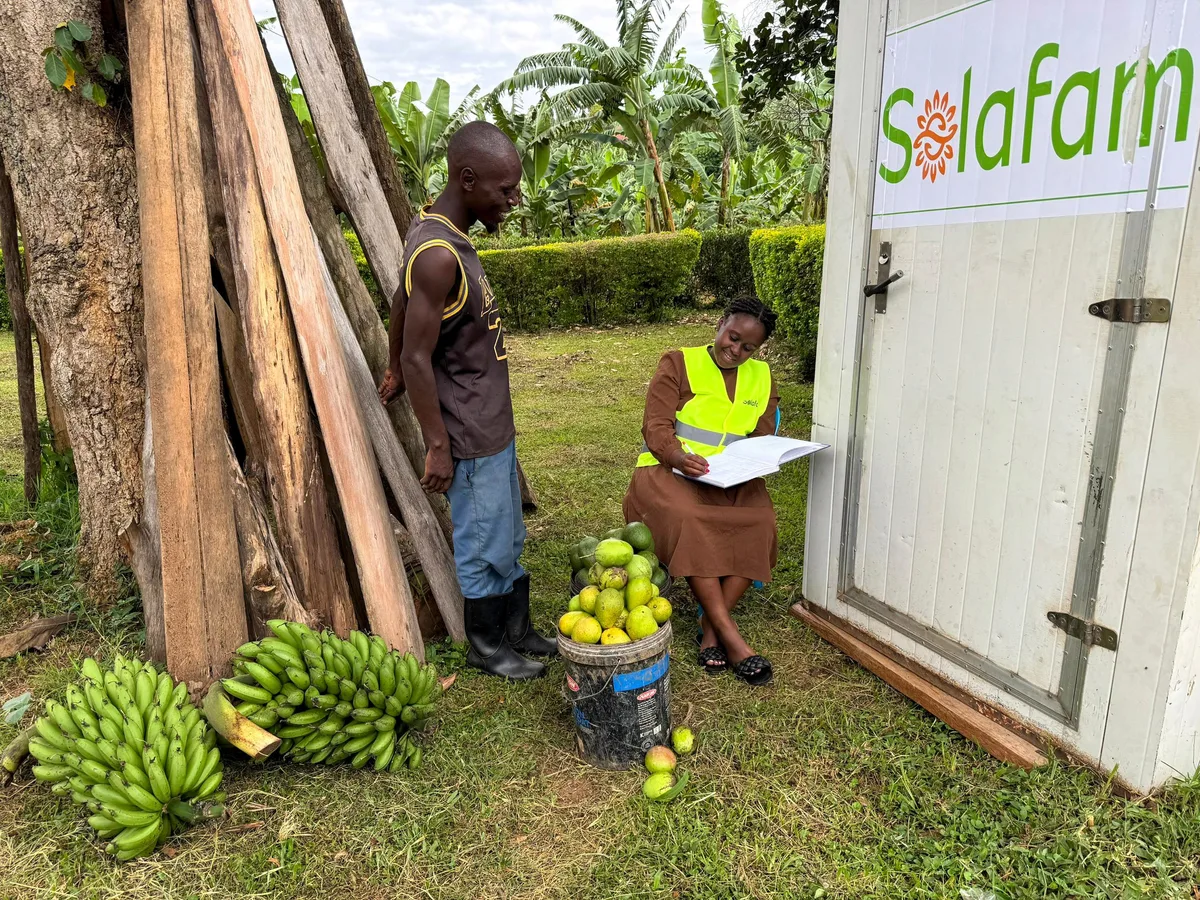
Four years ago, young Ugandan engineer Shifra Ainomugisha set up a climate-smart business. This year, the Commonwealth honoured her.
Every morning, before the day’s fresh tomatoes could be prepared for sale, a young Shifra Ainomugisha had another job: removing the rotten ones from her family’s store.
She was the only girl in a tomato-growing family in Ibanda District, western Uganda. The routine was so familiar that, at first, the waste appeared normal. Her family worked hard, yet a large part of each harvest spoiled before it could be sold.
“I used to wake up every single morning to collect rotten tomatoes from our store and leave the fresh ones for sale,” Ainomugisha recalled. “But it was so heartbreaking that the biggest percentage of the tomatoes were going to waste.”
Over time, the connection between those losses and her family’s circumstances became harder to ignore. At school, differences between what children could afford made visible what spoiled produce meant at home.
“We were kept in poverty, yet we were labouring a lot,” she said. “Maybe I needed a certain kind of school shoes, but I couldn’t get the shoes. It kept sinking in that something was not right.”
That recognition, which began when she was about 15, eventually became the foundation for Solafam Uganda Limited, the climate-technology company that Ainomugisha founded with university colleagues.
In June, she was named the 2026 Commonwealth Young Person of the Year for work that combines solar-powered cold storage, shared solar irrigation and an AI advisory service for farmers.
Ainomugisha studied renewable energy engineering at Makerere University in Kampala. There she met other sons and daughters of farmers, including Solafam’s chief operating officer, Moreen Nabahiirwa, a mechanical engineering student and now a colleague with business expertise.
They had knowledge and an idea, but no capital. A lecturer who had watched them work on a related university project became the first person outside their families to take the idea seriously.
“After school, you don’t have anything to start a business if you have not worked for an organisation and earned a salary,” said Ainomugisha. “We only had knowledge. We needed that one person to believe in us.”
The lecturer connected them to the Sahara Impact Fund. Its support helped them to build a solar-powered cold room from a repurposed shipping container, locally sourced batteries and solar panels. With nowhere else to install it, Ainomugisha placed it at her father’s home.
Her parents were the first people to test her prototype. Soon, other farmers in her village came to see the solution they had built in their home. Other farmers watched, but winning their confidence proved difficult.
“They saw a very young girl, 23 or 24 years old,” she said. “They would ask, ‘What do you mean you’re doing this? You’re a woman entrepreneur, an engineer, and you’re solving this?’ It was hard for people to take us in and believe in our solution.”
5News aggregated this summary from the outlet’s public feed. The full article, with all the context, is on www.dailymaverick.co.za — the content belongs to Daily Maverick.