WAR CRIMINAL: Ratko Mladić, genocidal Butcher of Bosnia, dies in prison
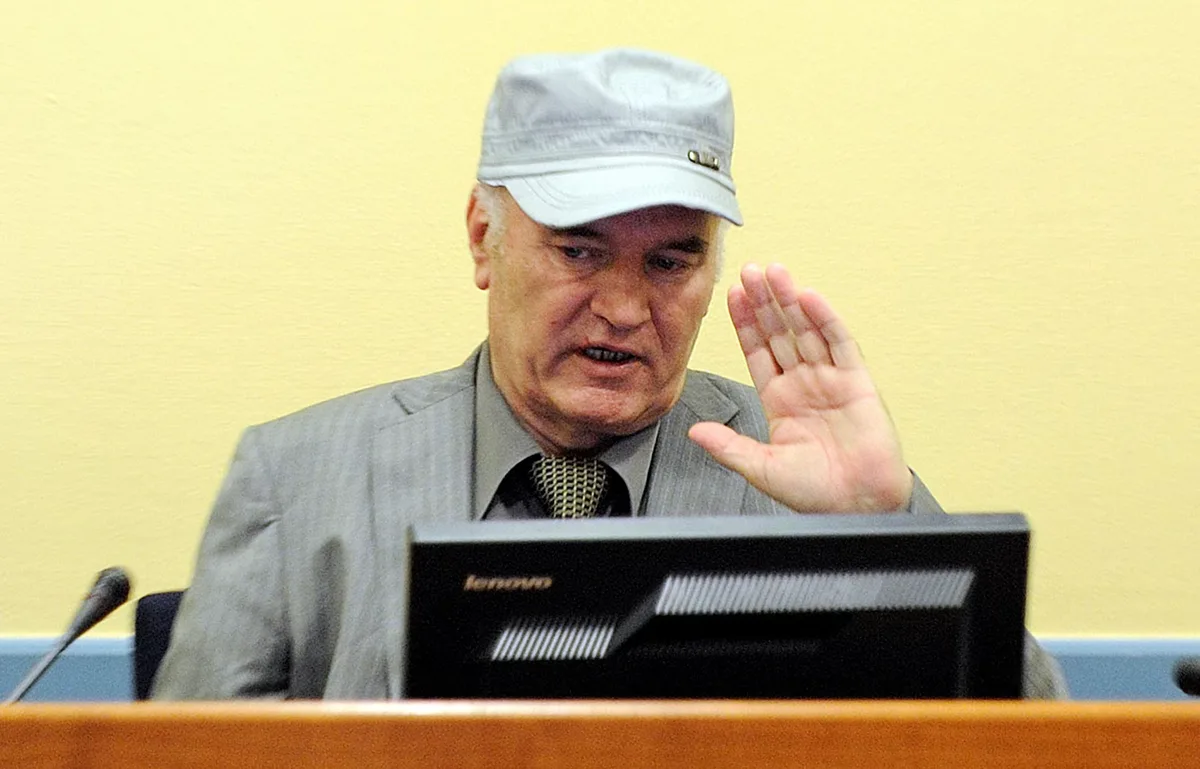
Ratko Mladić, convicted of genocide for orchestrating the 1995 massacre of at least 8,000 Muslims in a UN-designated “safe area” of Bosnia, Europe’s worst atrocity since World War 2, died on Thursday in United Nations custody.
The slaughter in Srebrenica was the grisly culmination of a war that had lasted more than three years, in which the general pounded the besieged capital Sarajevo daily with the artillery, tanks, mortars and heavy machine guns of his nationalist Serb army, killing 10,000.
The dead from Srebrenica were bulldozed into mass graves over four days in July 1995, some of them dug up and relocated to remote mountains to hide evidence of the killings.
The goal, as determined by the United Nations International Criminal Tribunal for the former Yugoslavia (ICTY), was “ethnic cleansing” — the forcible expulsion of Bosnian Muslims, Croats and other non-Serbs to clear Bosnian lands for a Greater Serbia.
The tribunal found that Mladić, with late Serbian President Slobodan Milosevic and Bosnian Serb political leader Radovan Karadzic, were part of a criminal conspiracy to implement the plan.
“I do not recognise this court,” Mladić, dubbed the “Butcher of Bosnia” by his opponents, said at an ICTY hearing on his case in 2014. When he was sentenced to life in prison in 2017, he shouted: “This is all lies, you are all liars!”
Mladić died in UN custody on Thursday, his lawyer Dragan Ivetic said, without giving a cause. He had spent his last months in the hospital ward of the UN detention centre holding him in a suburb of The Hague, Ivetic said.
According to his son, documents gave Mladić’s date of birth as 12 March 1942, but he was actually born on 8 March 1943.
Karadzic, also convicted of genocide in 2016, and Mladić topped the ICTY wanted list for years after Western powers ended the war. But until Milosevic was toppled by a popular uprising in 2000, Mladić lived securely — if discreetly — in Belgrade.
Milosevic died in detention on 11 March, 2006, a few months before a verdict in his four-year tribunal trial for genocide and other war crimes in Croatia, Bosnia and Kosovo.
The army Mladić created to fight in Bosnia was a model of ruthlessness, daring and brutality in the Serb warrior tradition, once prized in the life-or-death partisan struggle against the Nazi occupation of Yugoslavia in World War 2.
In some of the most horrific examples, prisoners suffocated in the heat after being forced to eat salt and denied water; were starved and raped in prison camps; were made to jump off a bridge and shot; and were gunned down at night by the hundreds after being driven out of detention with chemical gas.
“For me, Mladić is a symbol of all horrible crimes that happened during the war — our girls were raped, and boys killed, only because they were Muslim,” said Munira Subasic, whose son and husband were killed by Bosnian Serb forces after they overran Srebrenica.
“Germans had Hitler, Serbs have Mladić,” Subasic continued. “There is no difference between the two.”
5News aggregated this summary from the outlet’s public feed. The full article, with all the context, is on www.dailymaverick.co.za — the content belongs to Daily Maverick.