Next pandemic could kill millions fewer if vaccines are shared more fairly, report finds
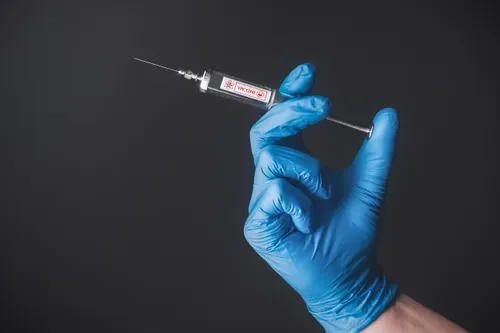
Nearly 2.7 million additional lives could be saved during a future pandemic if vaccines were distributed according to population rather than countries’ ability to pay.
Nearly 2.7 million additional lives could be saved during a future pandemic if vaccines were distributed according to population rather than countries’ ability to pay.
This is according to the latest NUS–Lancet PRIME Commission's report, Transforming Pandemic Readiness for Equity, which took a look at how inequalities could affect the response to a hypothetical future influenza A pandemic.
The commission modelled a pandemic scenario in which 58.5 million people would die without the rapid development of an effective vaccine. If vaccines could be developed quickly, the projected death toll would fall to 23.9 million.
However, the modelling found that the number of deaths could be reduced further if vaccine allocation was based on population size rather than purchasing power.
Under that scenario, an additional 2.7 million deaths could be prevented, with the largest reductions occurring in middle-income countries.
The findings highlight one of the major lessons from the Covid-19 pandemic: access to vaccines and other medical countermeasures can be heavily influenced by a country's ability to secure supplies.
The commission's modelling illustrated the trade-offs involved in distributing a limited vaccine supply more equally.
Under the population-based allocation scenario, deaths in high-income countries increased from a modelled 2.4 million to 3.9 million, while deaths globally fell.
It is worth noting that the figures are estimates from a hypothetical pandemic model and are not a prediction of the death toll from a particular future outbreak.
Its modelling found that interventions capable of increasing confidence in vaccines could prevent a further 1.9 million deaths in the hypothetical pandemic.
This points to another challenge for future pandemic responses: developing vaccines is only part of the process. People also need to trust and be able to access them.
The report argues that pandemic preparedness should take account of the social and economic conditions that influence people's ability to protect themselves during a health emergency.
The commission examined evidence from 20 countries and considered issues including access to healthcare, social protection, public trust and the ability of communities to respond to health threats.
5News aggregated this summary from the outlet’s public feed. The full article, with all the context, is on iol.co.za — the content belongs to IOL.