Hlabisa commits to six-monthly reports on Cape Town's service delivery failures
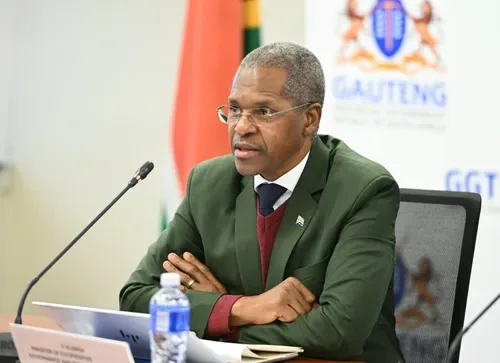
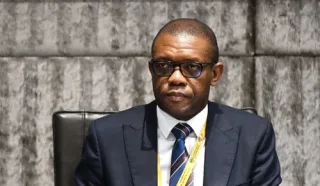
Co-operative Governance Minister Velenkosini Hlabisa has committed to six-monthly reports to Parliament on Cape Town’s implementation of remedial action following the Public Protector’s findings on service delivery failures.
Co-operative Governance and Traditional Affairs Minister Velenkosini Hlabisa has committed to reporting to Parliament every six months on the City of Cape Town’s implementation of binding remedial action arising from the Public Protector’s findings on service delivery failures in Langa Flats and Khayelitsha.
Hlabisa made the commitment in the National Council of Provinces (NCOP) on Wednesday after MPs questioned how the City would be held accountable for addressing the failures identified by the Public Protector.
“I do make that commitment of a six-monthly report to Parliament on progress made on the recommendations by the Public Protector to the City of Cape Town ,” Hlabisa said.
The Public Protector found that complaints about the City’s failure to provide basic municipal services in Langa Flats and parts of Khayelitsha were substantiated with shortcomings in housing, sanitation, water, electricity, waste management, public lighting and safety at municipal clinics amounting to maladministration, improper conduct and prejudice.
The report issued binding remedial action on the City, including measures to improve water access, repair sewer infrastructure, address electricity and lighting problems, improve cleaning services and regularise lease agreements.
Hlabisa said the responsibility for implementing the Public Protector’s remedial action remained with the City, while COGTA would engage the municipality through existing intergovernmental structures.
“The implementation of the remedial action directed at the City of Cape Town remains the primary responsibility of the municipality itself,” he said.
COGTA was engaging the City through established intergovernmental relations mechanisms, including the District Development Model, to co-ordinate the response and monitor progress.
“COGTA will therefore continue to facilitate co-operation across the three spheres of government to support the implementation of corrective measures,” Hlabisa said.
Some matters identified in the report required the involvement of the City, the Western Cape government and national departments, particularly in areas involving human settlements and basic services.
MPs also questioned how the City would be held accountable for failures that fall directly within its municipal responsibilities and whether intergovernmental co-operation could allow responsibility to become blurred.
Hlabisa said COGTA did not have the authority to impose consequence management on the municipality, and could only give support where necessary and ensure that the recommendations are followed accordingly.
Questions were also raised about the marginalisation of poorer communities and whether municipal planning and investment were reinforcing inequality between wealthier suburbs and historically disadvantaged areas.
5News aggregated this summary from the outlet’s public feed. The full article, with all the context, is on iol.co.za — the content belongs to IOL.