LUCKY MATHEBULA | When public office loses its temper, public representativeness is the casualty
To remain silent while the public sphere degenerates into a flowing sewer of political sludge is to enter into collusion of a special type with the odour.
Johannesburg is not an inconsequential municipality. It is arguably the commercial capital of the African continent, and a premium must therefore be placed on the calibre, judgment and temperament of those who lead it.
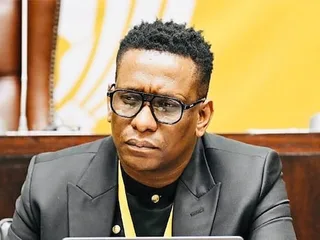
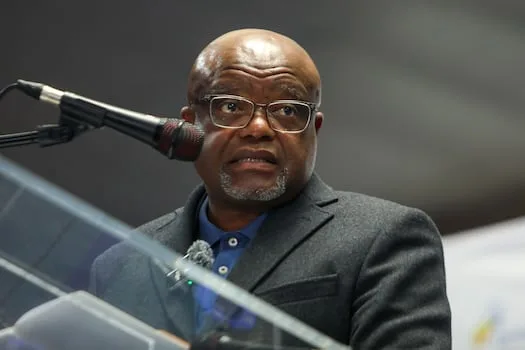
The response of mayor Dada Morero to a resident cannot be spin-doctored away , sanitised by party communications or excused by the provocation that preceded it.
At precisely the moment when the ANC seeks to showcase leaders supposedly shaped by its programme of renewal and rebuilding, it did not need the spectacle delivered by its Johannesburg mayor at a community meeting.
Morero’s choice to issue the rebuke in the vernacular gave the exchange an unmistakable force. It was not the language of an official momentarily searching for diplomatic words. It was the language of a man asserting the authority of both his person and his office, and doing so without restraint.
The episode is therefore not merely an unfortunate outburst. It is evidence that, in the very build-up to its promised renewal, the ANC may still be mired in a leadership crisis.
The party has only just emerged from a punishing and reputation-liquidating indecision over who should carry its mayoral flag. The Morero rant, broadcast live and circulated without mercy, may have made one part of that decision brutally simple: it supplied a public reason to eliminate him from the contest.
The bare truth is that people do not follow titles, degrees or accumulated years in office. They do not follow leaders governed by their emotions, and they do not vote enthusiastically for representatives who answer disrespect with more disrespect. They follow human beings they can trust: leaders who are honest, humble and recognisably human. These qualities sound elementary in theory and remain astonishingly rare in practice.
Crisis is the acid test of leadership. Anyone who fails that test in a community hall cannot casually be entrusted with the political, fiscal and social complexity called Johannesburg.
The ANC now confronts contending pressures in its Johannesburg mayoral choice that push against one another in ways that are incongruous and, at times, bizarre.
Yet judgment should not become lazy moralism. Morero has endured situations more severe than that fateful meeting without producing conduct of this kind. Any honest verdict must therefore confront the question the incident itself raises: what was it about being called a criminal, by this particular resident and in this particular setting, that generated so despicable a response? Political analysis must account for provocation even when it refuses to convert provocation into an alibi.
Whichever way that context is framed, Morero has placed the office he holds, the person he is and the political party whose face he has become into disrepute.
The swift exchange of apologies between him and his detractor is a bandage laid over a fresh reputation-fracturing wound. An apology can settle a personal quarrel; it cannot erase a public record.
5News aggregated this summary from the outlet’s public feed. The full article, with all the context, is on www.timeslive.co.za — the content belongs to TimesLIVE.