NKANDLA: Zuma’s architect ordered to repay R147m but ‘clearly did not act alone’
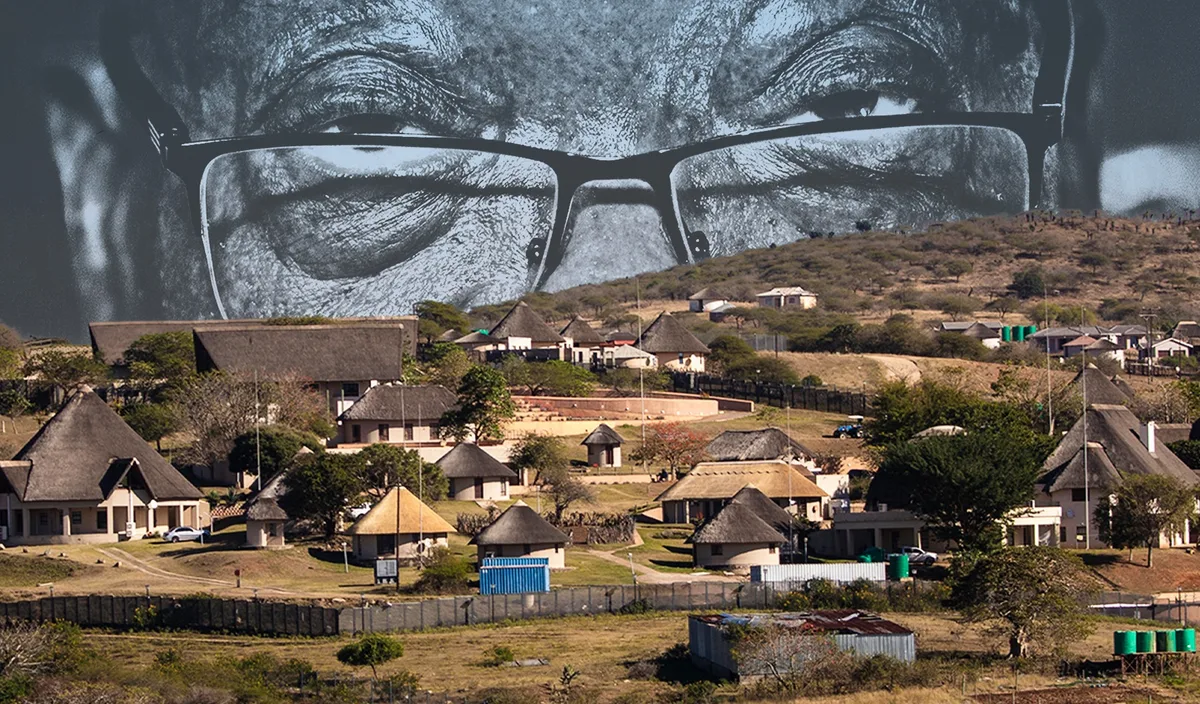
More than 10 years after the controversial Nkandla upgrades ballooned from a R27.8m security project to more than R216m, the SIU has secured a major victory, with architect Minenhle Makhanya now ordered to repay R147m for unlawful, wrongful and negligent conduct.
More than a decade after the controversial upgrades at former president Jacob Zuma’s Nkandla homestead became a national scandal, the architect appointed to oversee the project has been ordered to repay more than R147-million to the state.
Minenhle Makhanya, who served as the architect and principal agent for the project, was found liable for R147,269,444.06 following civil action brought by the Special Investigating Unit (SIU).
In a judgment handed down on Thursday, 27 August 2026, the Special Tribunal found that Makhanya’s conduct contributed to big financial losses suffered by the Department of Public Works (DPW), including payments for over-designed buildings, above-market construction costs and professional fees that were allegedly improperly certified.
The SIU had instituted action against Makhanya and the National Department of Public Works, which did not oppose the application. The tribunal, however, found that Makhanya was not the only person responsible for the escalation of the project’s cost.
“It is regrettable that the first defendant stands alone as the person against whom the Special Investigating Unit has launched action, as he clearly did not act alone in allowing the costs of the upgrade at Nkandla to balloon.
“However, as architect and principal agent, he bore the responsibility to ensure that the second defendant did not incur fruitless and wasteful expenditure,” Judge Karin Pillay said.
In December 2013, the SIU was authorised to investigate how the Department of Public Works handled the contracts and spending for the Nkandla security upgrades between 2008 and 2013.
The investigation looked at whether the contracts were awarded properly, fairly and transparently, and whether the government got value for money. It also aimed to recover any money the state had lost because of illegal or improper conduct.
When Zuma became president, he was entitled to security and protection for himself, his family and his private residence at state expense, in accordance with a Cabinet memorandum adopted in 2003.
SAPS conducted an assessment of the security measures required at the private residence, while the South African National Defence Force (SANDF) also became involved in assessing the necessary installations.
The assessments were submitted to DPW, which was responsible for determining the cost of the required security measures. The process required approvals from SAPS, the SANDF, the relevant minister and Zuma before DPW could implement the work.
After these processes had been completed, DPW determined the cost of the security measures at R27,893,067.46.
The amount was authorised and the budget secured by DPW’s Planned Maintenance Budget Committee on 11 August 2009.
5News aggregated this summary from the outlet’s public feed. The full article, with all the context, is on www.dailymaverick.co.za — the content belongs to Daily Maverick.