Affordable food basket costs R5,530, minimum wage earns R5,562
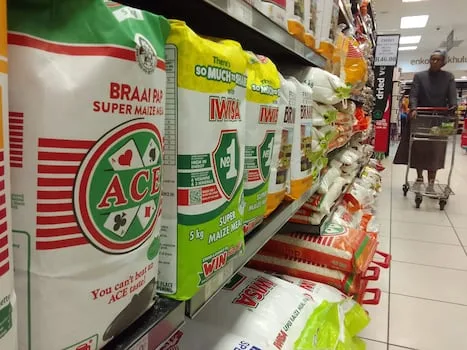
Official data showing that food inflation has remained relatively subdued, despite the headline number spiking in recent months, belies the lived reality of millions of South Africans who have felt the uptick in prices on supermarket shelves more intensely.
Though the price of basic items typically bought each month by lower-income households has increased by only about 0.5% each month since an initial 2.3% spike in April, it has still dented their ability to put enough food on the table as they contend with higher transport costs and electricity tariff increases of 8.76% this year , Pietermaritzburg Economic Justice and Dignity (PMBEJD) programme co-ordinator Mervyn Abrahams said.
The civil society organisation is tracking household affordability, poverty lines and the real cost of basic nutritional food baskets across the country.
“When you look at a household with a national minimum wage, and then you look at the level of unemployment , you can well work out that our basket tracks the lived experience of more than 60% of the country,” Abrahams told Business Day .
“Affordability is deteriorating, and the affordability crisis is on the increase, even though [official] food inflation hasn’t increased to the level that we had expected.”
Though headline consumer inflation has spiked higher since the outbreak of the Middle East war in late February, accelerating to 5% year on year in June from 4.5% in May, food inflation has bucked the trend, slowing to 1.6% in June from 1.9% in May, largely thanks to a good summer harvest.
In its forecast on Friday, banking group Absa predicted food inflation would ease further to 1.1% in July, mostly reflecting base effects on meat prices which rose sharply last year due to foot-and-mouth disease.
But the reality is that food is becoming increasingly expensive for poor households, Abrahams said.
The PMBEJD food basket tracks 44 items based on what a typical low-income household will buy, whose price has risen to R5,530.52 in July from R5,328.53 in March, at the start of the US-Iran war.
“Our basket asks a very specific question: what is the food affordability issue for low-income and poor households? So if you look at the national minimum wage in July … it would bring in roughly around R5,562.32. When you compare that with the cost of our basket, you see that wage will not buy you that basket of food,” Abrahams said.
South Africa introduced a national minimum wage in 2019 which currently stands at R30.23 per hour.
5News aggregated this summary from the outlet’s public feed. The full article, with all the context, is on www.businesslive.co.za — the content belongs to Business Day.