Can the ANC win back voters by admitting failure without taking responsibility?

Political parties are built to tell voters what they have done right. At its manifesto launch, the African National Congress did something far more unusual. It told voters where it had failed.
Nyasha Mcbride Mpani is the Business Executive Lead at Shikamo Political Advisory, a subsidiary of the International Centre for Political Campaigns.
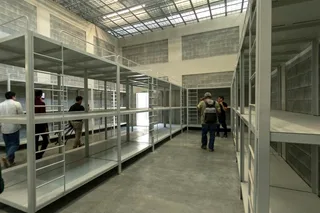
Before defending its record, before selling its promises and before asking voters to trust it again, the ANC placed an image of failure on its own screen. Behind its president was a photograph of a rundown rural facility accompanied by words few governing parties would willingly put on campaign material: “The ANC presents our Manifesto in full acknowledgement of areas in which we have fallen short.”
That sentence may prove more consequential than many of the promises contained in the manifesto itself.
Because the ANC was not simply launching a manifesto. It was attempting something much harder: renegotiating its relationship with voters who no longer need the opposition to tell them that the government has failed them. The question is whether admitting failure can persuade those voters to return.
There is a well-established communications tactic known as “stealing thunder”. The principle is simple: disclose damaging information about yourself before somebody else does.
Lawyers use it in courtrooms. Corporations use it in crises. Political campaigns use it when they know an opponent is preparing an attack.
The logic is powerful. Bad news can sometimes be less damaging when it comes voluntarily from the person responsible for it. The disclosure can make the speaker appear more credible because the audience concludes: At least they are telling us the truth.
That appears to be the gamble the ANC is making. But there is an important difference. The ANC is not revealing a secret.
Millions of South Africans already know that public services have failed in places. They experience that reality in roads, water, electricity, housing, municipal administration and the everyday frustrations of dealing with institutions that do not work as they should.
The voter does not need a manifesto slide to discover failure. The voter has lived it.
That makes the ANC’s acknowledgment simultaneously powerful and dangerous. Powerful because denying an obvious reality would further erode credibility. Dangerous because once a governing party publicly accepts that reality, the political conversation changes.
The question is no longer: Did you fail? The question becomes: If you knew you failed, why should we believe you will succeed this time?
This distinction matters. What happened on that manifesto stage was not an apology. No individual accepted responsibility. No minister was named. No failed programme was attached to a consequence. No deadline was offered alongside the acknowledgment.
5News aggregated this summary from the outlet’s public feed. The full article, with all the context, is on www.dailymaverick.co.za — the content belongs to Daily Maverick.