PATH TO SPIRITUALITY: Dalai Lama’s subtle teachings offer both refuge and respite
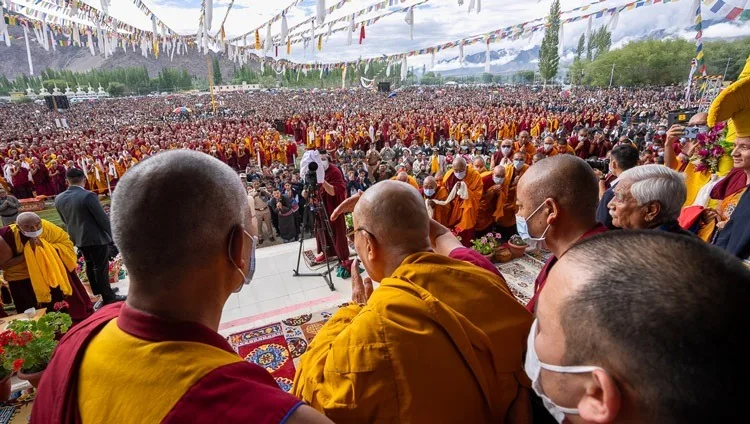
The discomfort of being packed into a temple without room to stretch is well worth it when the leader of Tibetian Buddhism speaks about how to practise patience and grace through life’s journey.
His Holiness the Dalai Lama (the 14th) gives annual public teachings at his temple in Dharamsala. This year, they were given every day for about two and a half weeks at Namgyal Monastery Temple and attended by several thousand people roughly divided into three categories: monks and nuns, Tibetans, and Western sangha (community of spiritual practitioners). People trekked and travelled far and wide to get to Dharamsala, walking for miles or sitting on buses for days. Westerners flew in from all corners of the globe.
We had all come to see and hear the spiritual leader of Buddhism and be blessed by his holy presence – to receive profound teachings on the path to enlightenment and how to achieve freedom from cyclic existence and liberation from suffering.
There was a strong atmosphere of spirituality and peace, which coexisted with the noise, dirt and dust of samsara (cycle of birth, death and rebirth in Buddhism), which is very visible in India. High-ranking lamas, monastics, lay disciples, travellers and seekers of truth and enlightenment, ordinary persons, beggars and lepers all coexisted in a country where samsara and nirvana (release from suffering) are both accessible, depending on your state of spiritual evolution.
We had a busy schedule. After a breakfast of banana porridge, muesli with fruit and honey, orange juice and coffee, we walked down to the temple, weaving our way between potholes, taxis and beggars, in good time to clear security and secure our seats. It was necessary to get to the temple about an hour before in order to get through the tight security.
This entailed standing in long queues in the hot sun, waiting your turn to go through the metal detector and the body and bag search. It took time. Once seated in the temple courtyard, you couldn’t budge for the next couple of hours, even to go to the toilet, as there were just too many people to squeeze through.
The arrangements in the temple consisted of three separate seating areas: up front for the monks and nuns; the Tibetans on one side under some trees; and Westerners on the other side under a roof. It was possible to “reserve” your seat before the teachings started by writing your name on a large piece of cardboard and taping it to the floor. This served as your “seat” for the next two weeks.
I was lucky and managed to secure a place on the edge of the Western area, in front of a pillar, which gave welcome support to my back. Maurice sat in front of me. It was nice being on the edge as there was a bit of space, so you didn’t feel hemmed in on both sides by the people who squashed into the temple like sardines.
The large temple was filled to overflowing. The atmosphere was reverent and jovial, with Tibetan families bringing packed lunches, which they generously shared with those sitting near them.
Conditions inside the temple were tough. You sat on a cushion on your little piece of cardboard on the hard concrete floor, with no space to stretch your legs.
5News aggregated this summary from the outlet’s public feed. The full article, with all the context, is on www.dailymaverick.co.za — the content belongs to Daily Maverick.