POWER GUZZLERS OP-ED: Approved in the dark — the hidden environmental toll of SA’s data centre boom
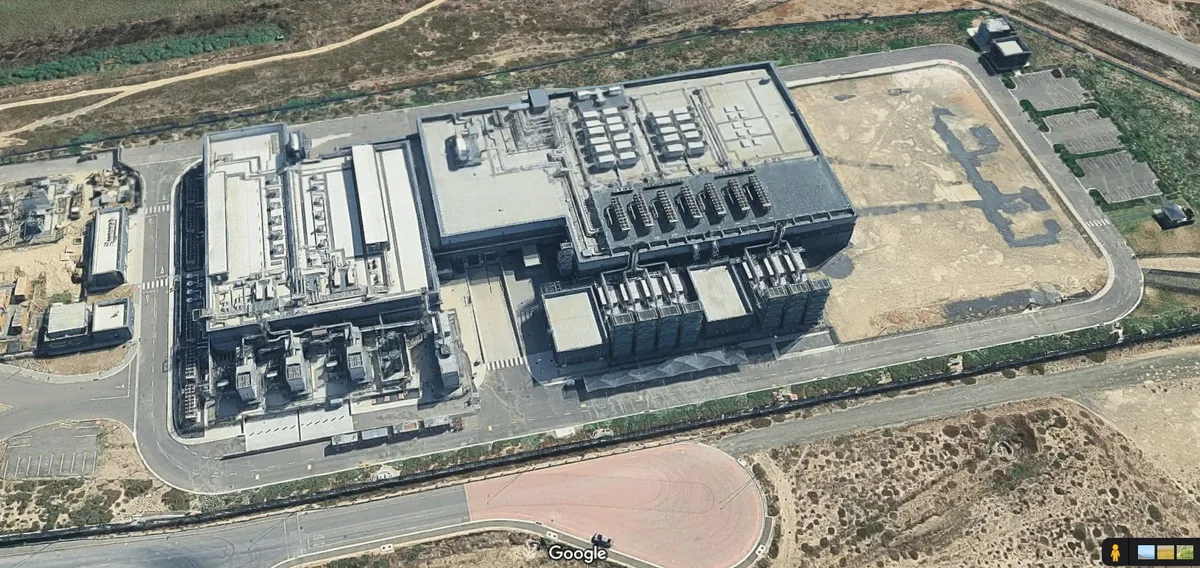
As South Africa’s data centre boom accelerates, civil society groups are petitioning the SAHRC for strict regulation and transparency before unmonitored facilities strain local water, land, and energy grids.
When the City of Cape Town’s planning tribunal approved the land-use changes for a second Equinix hyperscale data centre in July, one member of the tribunal voted no. The information missing from the application, about the facilities’ water and electricity use, he warned, “should not be ignored”.
But it was. While the approval went through on the King Air Industria site, next door, residents of Bishop Lavis and of Barcelona and KTC informal settlements in Gugulethu remember queueing for water during Cape Town’s water crisis of 2017-2018. When the developer was asked how much water the facilities would use, the answer was that this would be confirmed after approval.
That single sentence tells you most of what you need to know about how South Africa is handling the fastest data centre expansion on the African continent. This is why our five organisations have filed a joint submission to the South African Human Rights Commission (SAHRC), which is investigating the human rights implications of that boom.
Our argument is straightforward. Data centres are the physical backbone of the digital economy and South Africa needs digital infrastructure. But these are not ordinary buildings, and we are approving them as if they were, without the most basic information about what they will take from our water sources, our grid and our land.
Before scale, a question: what is all this for? Even the industry’s own lobby, the Digital Council Africa, puts South Africa’s current capacity near 500MW – capacity that already carries our online life with good latency and redundancy. Yet the pipeline of announced projects would more than triple it, and as Pitso Tsibolane notes , at industry gatherings investors and engineers are “notably reluctant to bet on demand at that scale arriving within five years”.
The frontier large language models driving the AI race aren’t currently trained outside of the US or China. So what is all this proposed compute for? We are being asked to hand over land, water and power now, for demand the industry itself cannot confidently identify or explain.
Now, scale. The 500MW are hosted across about 60 known data centres, whose combined load is equivalent to more than a quarter of Cape Town’s peak electricity demand. Yet there is no public register of these facilities and where they are, no requirement that operators disclose their water or electricity consumption, and no regulator, anywhere in government, that sees the sector’s full footprint.
Next, water. The racks of servers inside a data centre run hot and have to be cooled continuously, and the cheapest, most common way to do that is to evaporate water.
5News aggregated this summary from the outlet’s public feed. The full article, with all the context, is on www.dailymaverick.co.za — the content belongs to Daily Maverick.