REBUILDING STRONGER: When the rivers came for Kruger, the waters took everything
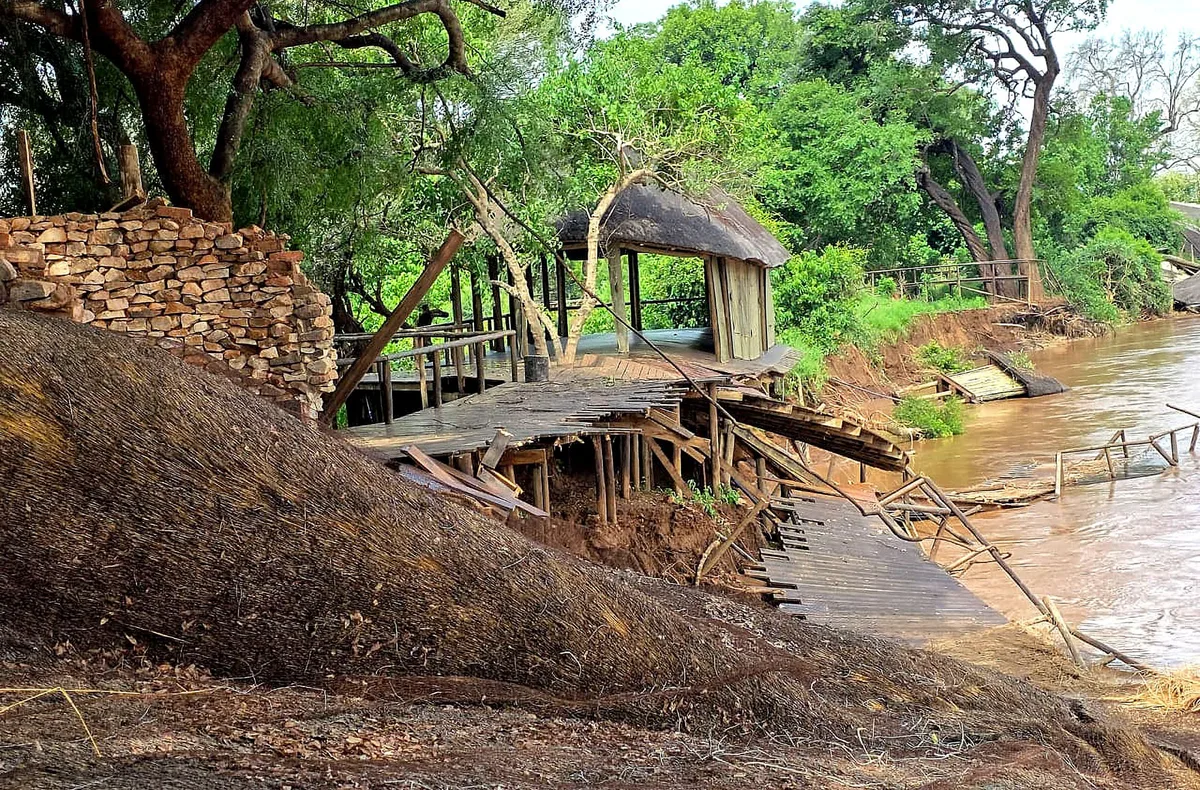
{JSON.stringify(article.attachments[0], null, 2)} --> At Letaba, a wall of brown water turned an orderly camp into an evacuation zone. At Pafuri, the river tore the ground away. Four camp leaders remember the cold, the roar – and the tourists who would not leave.
This is part 2 of a series on the Kruger National Park. Part 1 can be read below.
The fridges went first. One by one, the Letaba River lifted them from bungalow verandas and sent them floating through the camp. Chairs followed, then tables and restaurant cushions – bright, absurd scraps of domestic life riding brown water that moved with the weight and noise of the sea.
Mpho Mudau was out in the rain, soaked through, issuing orders. The drops struck hard and cold against her uniform. The river made waves, furniture knocked and shifted in the current.
Around her, staff ran between units, helped guests pack and moved vehicles towards the gate. There was no time for an umbrella or for fear. There was only the next instruction: move this car, keep people away from the water, get everyone out.
Some tourists still argued. They were on high ground, they said. The water would never reach them. Mudau, Letaba’s hospitality services manager, had no patience left for the soft language of customer service.
“Pack your stuff, you have to get out.” Even if the river stopped short, she told them, nobody could guarantee where it would stop.
That blunt command captures the pressure inside Kruger National Park’s camps when the floods struck in January 2024. The danger was also uncertainty – which bridge had gone under, which road remained open and how quickly a beautiful river could become an animal with no regard for buildings or bookings.
At Letaba, staff had watched the river for three days as it climbed the markers along the bank. At about eight on the morning of the evacuation, Mudau saw that it was about to break its banks. The final decision was hers. In that moment, categories disappeared.
“We cannot differentiate between guests or staff members,” she said. “All people need to be safely out.”
The staff communicated, carried luggage and listened, even as some phoned home to hear that water threatened their houses and children. The tourists were harder. A few kept bargaining with the flood: their unit was safe, their car was high enough. Staff packed alongside them and pushed them towards safety.
The northern route was already cut by a breach in the high-level bridge. A second route could close before the convoy reached it, so Letaba’s people were moved south to Olifants.
Behind them, the river entered the camp. It reached roughly 1.5 metres in the units closest to the water and flooded five senior staff houses, including Mudau’s. Food, clothes and furniture were lost. Outside fridges floated away. Mud filled rooms, electrical boxes and sewer lines.
Afterwards, the work carried the sour, heavy reality of saturated silt and damaged sewage systems. The restaurant looked as if it had been hand-grenaded.
5News aggregated this summary from the outlet’s public feed. The full article, with all the context, is on www.dailymaverick.co.za — the content belongs to Daily Maverick.