How a New Tripartite Alliance Aims to Secure Africa’s Health Sovereignty
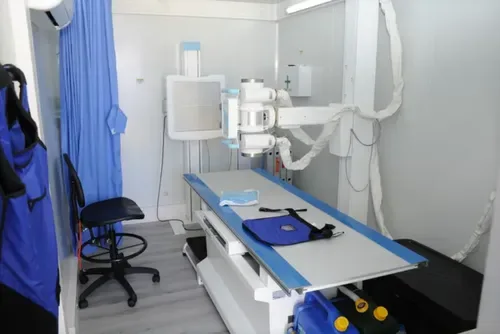
Mobile clinics provide a full range of healthcare services to farming communities in the Western Cape, including immunisation for newborns.
A major shift occurred on September 16, 2026 . The Southern African Development Community (SADC), the Government of China , and UNAIDS announced a collaborative framework designed to decentralize drug production. By transitioning from passive consumption to local production, this alliance seeks to establish true health sovereignty for Southern Africa.
The announcement followed a targeted, multi-city tour of advanced production facilities across South Africa, including manufacturing hubs in Johannesburg, Durban, and Cape Town . Led by regional officials and the Global Health Innovation Institute (GHII), the delegation analyzed existing infrastructure in genomics, diagnostics, and vaccine manufacturing.
The primary goal is clear: lower the region's dependence on foreign imports and build defense mechanisms against future pandemic disruptions. Rather than relying on traditional, slow-moving aid cycles, this model focuses on direct industrial integration. It connects Chinese manufacturing capacity, technical expertise, and capital with African biotechnology facilities.
The strategy emphasizes localized security. If a region lacks the capacity to manufacture its own basic medical supplies, it remains vulnerable to global market shocks and export restrictions. This reality became clear during the COVID-19 pandemic and the early years of the rollout of antiretroviral drugs.
Turning this manufacturing plan into a reality requires addressing complex regulatory challenges. The SADC region features a fragmented regulatory landscape, where varying standards across borders can delay the distribution of locally manufactured goods. To address this, the new partnership focuses heavily on aligning regulatory frameworks. The goal is to establish a streamlined, high-standard review system that allows a medicine produced in South Africa or Botswana to clear safety checks quickly across all 16 SADC member states.
Sustainable financing presents another hurdle. Building and upgrading facilities to meet international Good Manufacturing Practices (GMP) requires significant up-front capital. The collaborative framework aims to address this by introducing innovative financing mechanisms and securing predictable regional procurement agreements. By guaranteeing that local governments will prioritize buying regionally produced medicines, the alliance provides the market stability required to attract long-term investment.
This collaboration aligns directly with the United Nations' Political Declaration on HIV/AIDS, which mandates a rapid expansion of local health technology production to help end AIDS as a public health threat by 2030 . The partnership serves as a practical application of South-South cooperation, demonstrating how developing economies can share technology and industrial capacity directly, without relying entirely on Western supply hubs.
Success will be measured by the volume of active pharmaceutical ingredients (APIs) produced on African soil and the reduction of delivery times for critical diagnostics.
5News aggregated this summary from the outlet’s public feed. The full article, with all the context, is on iol.co.za — the content belongs to IOL.