GETTING CANDID: Standard Bank CIO talks about that hack and managing AI token budgets
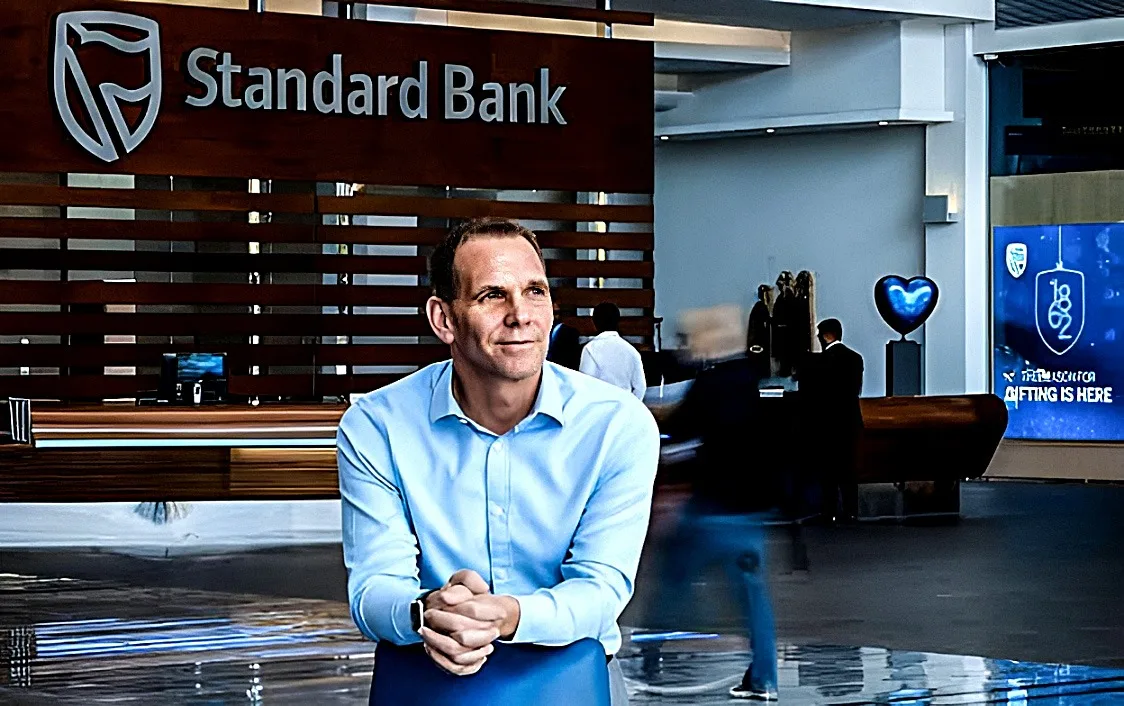
AWS Summit Johannesburg brings together many of South Africa’s most influential techies. Standard Bank’s tech chief Jörg Fischer chose the occasion to answer questions from Daily Maverick.
Before getting into the details of Standard Bank Chief Information Officer (CIO) Jörg Fischer’s responses to previous Daily Maverick reporting about the Rootboy hack and the group’s investments in AI hardware through the Stanlib infrastructure fund, we need to unpack his thoughts on AI token budgeting – because it kind of solves many of the problems of using AI in a post-tokenmaxing era.
Fischer said during an interview with Daily Maverick at AWS Summit Johannesburg – which moved to Gallagher last week from its traditional home (and good coffee) of Sandton Convention Centre – that he puts the Standard Bank token spend into three buckets.
Some backstory Corporates pay for their generative AI use through a mix of methods, but the really intense code building is mostly billed by the token. An overly simplistic way to quantify a token is to think of it as fraction of a word in the AI prompt (read: the instruction you give the AI model). Always remember that large language models (LLMs) are word calculators that count the probability of certain words appearing after others – learned through the training data – and those words are made up of different scores
First there’s the staff and productivity tools for general administrative tasks that are licence-based rather than metred by the token. This is where you’ll find the consumer-grade stuff you’re used to, like Microsoft Copilot, Perplexity and Claude.
Instead of restricting access, Fischer manages this via soft targets. This allows employees to freely experiment and upskill without administrative bottlenecks:
“All we’re doing is we’re protecting the organsation, but we’re not being bureaucratic about it”
Then there’s the software engineering bucket where he isolates developer tools like Cursor, GitHub Copilot and Claude Code because these are billed by the token.
“I take software engineering out of the first bucket... because your biggest consumption from tokens will come in software engineering.”
Every developer is registered with a standalone, individual account with enforced soft caps. This is designed to prevent runaway bills: “What we don’t want to do is that if something horrible goes wrong and then we end up with a massive token budget.
“If an engineer can prove why they need more tokens, they get the tokens.”
Fischer rejects the simplistic metric that high usage equates to high capability.
“The thing is we’ve gone very much away from this idea, because many organisations also went wrong whereby they thought the best people are the people that burn the most tokens... we look at it slightly different by saying what is the output?”
Which brings us neatly to the third and final bucket of his framework, and the one that keeps Standard Bank competitive.
5News aggregated this summary from the outlet’s public feed. The full article, with all the context, is on www.dailymaverick.co.za — the content belongs to Daily Maverick.