EXPLAINER | What health risks could the Dikwena mine dam collapse pose?
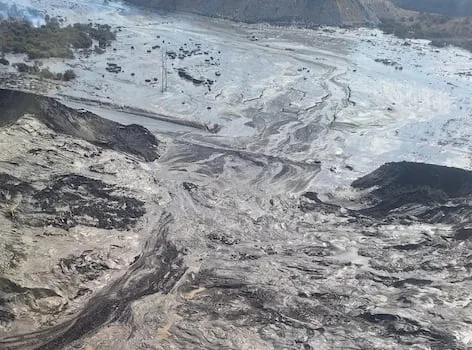
The collapse of a tailings storage facility at Samancor’s Dikwena Chrome mine near Brits has raised concerns about the potential health risks facing surrounding communities, particularly if mining waste has entered local water sources.
The tailings facility’s compartment 1B failed on Thursday, releasing almost all the stored sludge and sending waste beyond the mine premises .
While no injuries have been reported, the water and sanitation department and the Limpopo-Olifants catchment management agency are investigating the incident, with samples of affected water being tested.
According to public health expert Dr Angelique Coetzee, the immediate risks depend largely on how close people are to the affected area, the extent of the spill and, crucially, what substances are contained in the tailings.
“We do not yet know exactly what chemicals are present in the escape material or whether the surrounding water sources have been contaminated,” she said.
“Direct contact with contaminated mud or water may cause irritation on the skin.” — Public health expert, Dr Angelique Coetzee
Coetzee said one of the first concerns was the physical danger posed by the sudden movement of sludge.
While no injuries have been reported in the Dikwena incident, Coetzee said people should avoid the affected area and ensure they do not come into contact with the sludge.
“Direct contact with contaminated mud or water may cause irritation on the skin, depending on what chemicals and the concentration of those chemicals that were present,” she said.
She urged particular caution around children, who may be tempted to play in or near the sludge.
“If that contaminated sediment dries, then it becomes dust. And then if you inhale some of those contaminated particles, that can irritate your nose, your airways, and even aggravate asthma or other respiratory diseases,” she said.
Residents should avoid areas covered by the dried material and avoid disturbing or sweeping contaminated sediment, she said.
Coetzee identified water and food contamination as one of the community’s most important potential concerns.
“Another question to ask is, did the tailings reach the groundwater? Any boreholes or irrigation channels or surface water? And exposure could also occur through drinking, cooking, livestock or irrigated crops,” she said.
5News aggregated this summary from the outlet’s public feed. The full article, with all the context, is on www.sowetanlive.co.za — the content belongs to Sowetan.