ADEKEYE ADEBAJO | Clement Manyathela’s hate radio stereotypes Nigerians
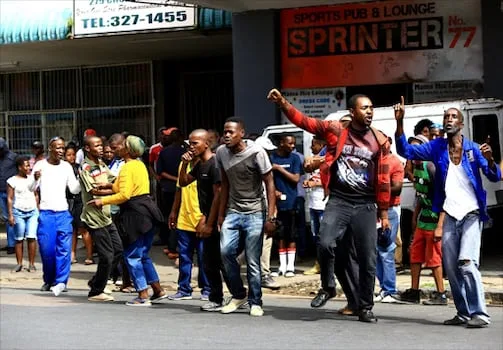
Xenophobic stereotyping of Nigerians as drug-traffickers and criminals is widespread in South Africa. I recently listened to an extraordinary broadcast by Clement Manyathela on Radio 702, unabashedly wielding these stereotypes, even as he kept unconvincingly noting that he was not talking about all Nigerians.
Manyathela started by highlighting the recent diplomatic agreement reached by South Africa and Nigeria. His main gripe was that Abuja was not doing anything or making any statements urging its citizens to respect South Africa’s laws. But Nigerian president Muhammadu Buhari , for example, during a visit to South Africa in 2019 after xenophobic attacks against Nigerians, publicly warned his compatriots to follow the laws of their hosts, noting: “When you are in Rome, behave as Romans do.”
Manyathela kept awkwardly referring to vigilante mobs responsible for maiming, murder and mayhem as “anti-illegal migration marches”. In stark contrast, UN secretary-general Antonio Guterres more properly condemned these “criminal acts perpetrated by individuals inciting violence and exploiting socioeconomic conditions”. Since 1994, more than 935 xenophobic attacks have resulted in more than 384 deaths. Not once during his nearly one-hour show did Manyathela condemn this violence, merely noting that “a few people have died and thousands deported”. This was a rambling rant devoid of context, facts or policy options.
Manyathela was upset about Nigeria “pointing fingers” at South Africa by merely asking Pretoria to assume its legal responsibility of protecting Nigerian citizens. He consistently insisted that Abuja must act against its own citizens, but the bilious broadcaster had no idea what exactly he wanted Nigeria to do.
Manyathela then launched into an unhinged tirade against “certain” Nigerians who he said were involved in organised crime, illicit drug trafficking and financial fraud. He noted that he had personally encountered these Nigerian drug traffickers in Randburg and Sunninghill. When a caller asked him whether he had identified these criminals as Nigerian by their look or accent, Manyathela untruthfully argued that he had not talked about just Nigerians. He also failed to tell us whether any other foreigners or South Africans were involved in this complex drug trade. When a caller told the broadcaster that he had personally witnessed a South African policeman in a township taking money from drug traffickers, Manyathela offered no reasoned response.
Predictably, listeners responded in unashamedly prejudiced tones: they complained that Nigerians were going around the world committing crimes and condemned Pretoria for “babysitting” other African countries, threatening that Somalis would be forcibly removed from townships.
He instead added fuel to a burning Afrophobic fire. His schizophrenic framing of the issue was later contradicted by his conceding that Abuja had no control over the actions of its citizens.
5News aggregated this summary from the outlet’s public feed. The full article, with all the context, is on www.businesslive.co.za — the content belongs to Business Day.