Redefining indigenous identity and knowledge in post-colonial Africa
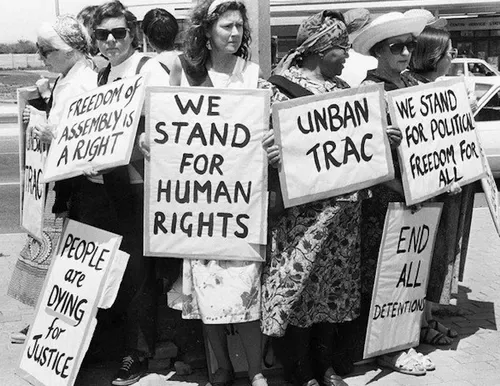
WOMEN'S DAY: The vibrant celebration of National Women’s Day must resonate with our commitment to recognising and restoring indigenous identities in South Africa. As we honour our women, we must also amplify the voices of those who have fought long and hard against systems of oppression, ensuring that their rich histories are preserved and celebrated in our educational frameworks.
Recently, as our nation celebrated our widely observed National Women's Day, the world commemorated a too-often side-lined event: International Day of the World's Indigenous People. This is especially momentous in Africa, where indigenous people have been arduously contending with the erasure and oppression of their identities.
From languages, to history, to traditions, to education, and far beyond, indigenous people have been — for decades — pushing back against western imperialist systems of oppression. This is exactly why this commemoration cannot be reduced to a celebration of traditional clothing, music and culture before returning to institutions that continue to marginalise the very people we claim to celebrate.
There is a contradiction in celebrating indigenous peoples while ignoring the systems that have disconnected them from their identities. We cannot celebrate culture while allowing languages to disappear, indigenous knowledge to remain peripheral, and generations of young people to lose connection with their histories.
For indigenous peoples, this has never simply been about cultural recognition. It is about the right to retain languages, preserve histories, pass knowledge between generations and have their systems of understanding recognised.
Colonialism understood this very well. It did not only seek to control land and resources. It sought to completely destroy the relationship between people and identity. Oral histories were dismissed because they did not fit Western definitions of authoritative history. Indigenous knowledge was reduced to commonplace folklore. African languages were wholly pushed aside, while European knowledge was elevated as the universal standard.
South Africa knows this history intimately. More than 30 years after political liberation, institutions still carry the imprint of colonialism and apartheid. Political liberation did not automatically produce epistemic liberation; many structures that produced and transmitted Eurocentric knowledge have remained firmly intact.
The debate around decolonising education, from #RhodesMustFall to #FeesMustFall and broader curriculum reform, was never simply about statues, reading lists or fees. It was about who has the authority to define knowledge in a society that is supposedly our own.
The problem with our curriculum is not only what was left out.
5News aggregated this summary from the outlet’s public feed. The full article, with all the context, is on iol.co.za — the content belongs to IOL.