HOMAGE TO HOPE OP-ED: Paul Simon’s Graceland at 40: A boycott-busting, rule-breaking, crossover cult hit endures
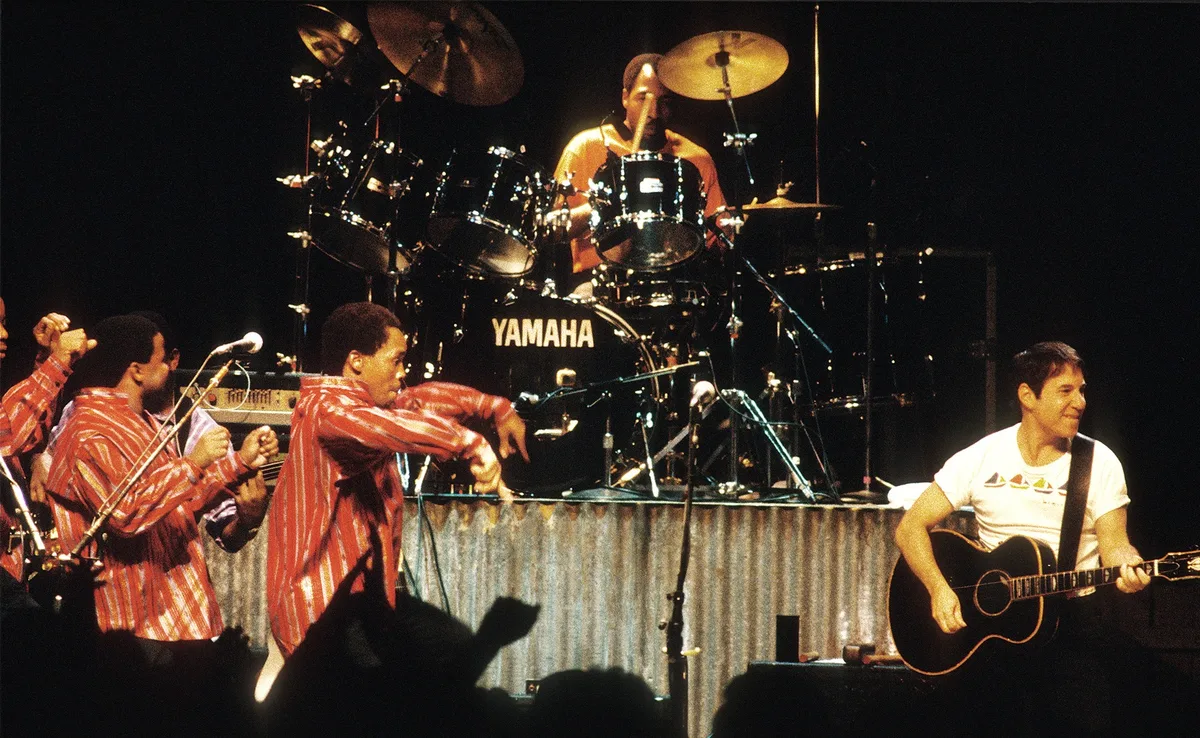
{JSON.stringify(article.attachments[0], null, 2)} --> Forty years after its release, Paul Simon’s Graceland remains a musical landmark in the New South Africa. This article by two South African authors is an intergenerational homage to the album, and the country that made it possible.
If there was one artist in apartheid South Africa that knew how to musically step across the colour line, it is David Kramer. Kramer was the Afrikaans singer whose music was the most banned from airplay on radio, and he was rejected by the Afrikaner establishment for daring to stage musicals with his collaborator Taliep Petersen that showed that Afrikaans was not necessarily a white language.
So it was rather fitting that he was acting as a tour guide for Paul Simon during the recording of the Graceland album. In an anecdote featured in the song, The Paul Simon Story, he tells the tale of showing Simon the tourist hotspot of Cape Point near Cape Town. While there, a bus full of South African tourists halts, disembarks, sees Kramer and swamps him for autographs and photos (this was the time before selfies). No one recognises the world-famous Simon who is left alone by the crowd, watching the spectacle unfold in front of him.
For those born then, South Africa in the Eighties has a unique allure. It is recalled with the cushiness of nostalgia, but roughened with a macabre excitement, since thrill is ultimately a byproduct of violence. With the Graceland album playing in the background, the location of those first memories of the puppies and the trampoline in the backyard sits snugly next to towns that became defined by atrocities. The childhood home, a red-bricked island among the death squads of Vlakplaas, the Sebokeng massacre, the Soweto protests.
Those who came of age around the time of the first State of Emergency, declared in July 1985, could no longer escape the fact that the fragile shell of totalitarianism was cracking. When prompted, the suburban perpetrators of apartheid speak of this time with an initial stoicism and resignation. Then, almost predictable to a T, the narrative is slated away with a persistent stutter when the lived experience revisits the body of a SADF veteran 40 years on: the shrill wail of someone being necklaced; the acrid smell of gogos wetting themselves during a midnight raid; the piercing stare of a four-year-old throwing a pebble at a Casspir, imitating his elders, as seen through the scope of an R4 rifle.
The second State of Emergency determined that you couldn’t mention or write about the State of Emergency, not only limiting protest even more, but also preventing the press from reporting on it.
However, besides suppressing mass democratic movements in the townships, South Africa of the Eighties was, paradoxically, soul destroyingly boring for the young adult. The good boys and girls who came of age under the National Party were not up to causing any trouble, and any action or statement that challenged the norm meant trouble.
5News aggregated this summary from the outlet’s public feed. The full article, with all the context, is on www.dailymaverick.co.za — the content belongs to Daily Maverick.