PARLIAMENT: Didiza survives no-confidence vote, but questions remain over Parliament’s authority
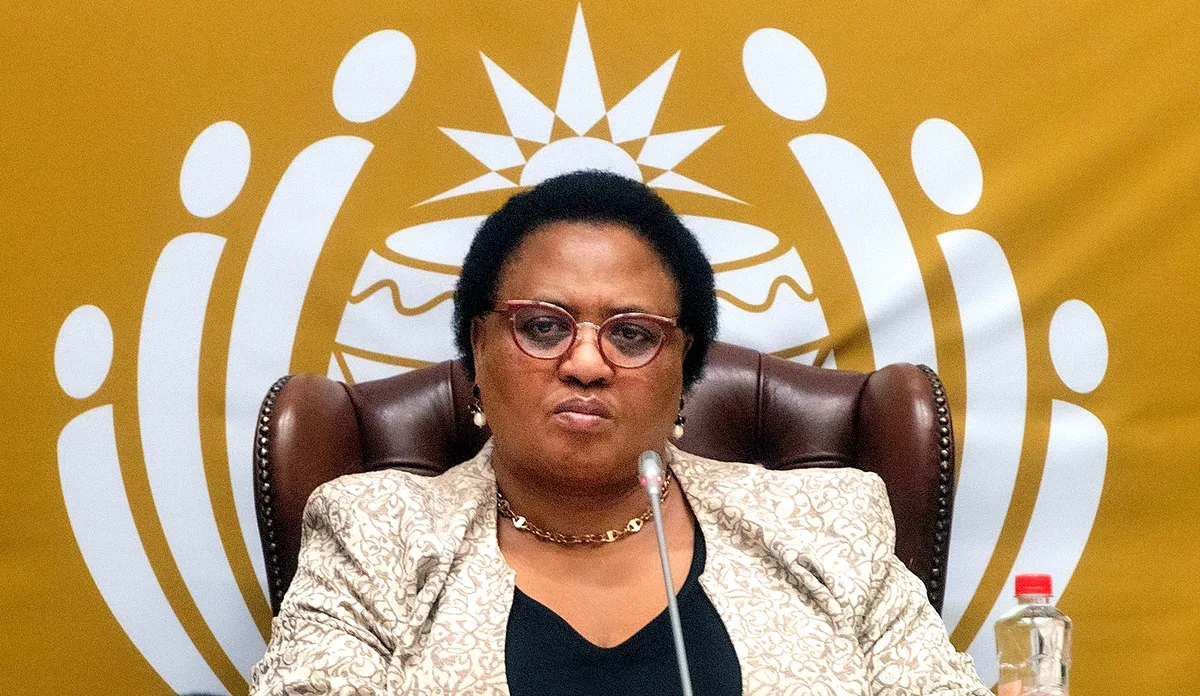
The defeat of the EFF no-confidence motion against the National Assembly Speaker, Thoko Didiza, was predictable. More unexpected was how Wednesday’s debate underscored concerns across party political lines about Parliament’s institutional independence and how it conducts its business.
“Ms Didiza is not fit to preside over a legislature whose role and constitutional responsibilities she is not willing to defend. She showed bias at a critical point in [our] democracy,” said EFF leader Julius Malema in support of the motion of no confidence against National Assembly Speaker Thoko Didiza.
His motion followed Didiza’s decision not to oppose President Cyril Ramaphosa’s successful court bid to interdict parliamentary public impeachment proceedings in the Phala Phala saga. The President earlier launched a court review – the hearing starts on 2 September – against the Section 89 report that found he had a case to answer over the theft of dollars stuffed in sofa cushions on his private game farm, Phala Phala.
Malema pointed out that Didiza ignored her own legal team’s advice to challenge the interdict, choosing instead to “seek a legal opinion from the law firm of a former ANC official” – which advised her to accept the court’s decision.
The debate, which lasted more than two hours, highlighted deep concerns about how Didiza’s decision affects Parliament’s ability to oversee and hold the executive to account, while sparking broader criticism of the way Parliament operates.
DA MP Glynnis Breytenbach said Didiza’s decision raised “legitimate questions [about] whether Parliament was sufficiently defending its own constitutional authority and independence.
“When Parliament’s constitutional processes are challenged, the institution must be prepared to defend those processes robustly and without fear or favour. The Speaker’s office therefore carries a particular responsibility to ensure that Parliament is never perceived to be subordinate to the executive – and certainly not to the interests of any political party.”
Breytenbach said while democracy required Parliament to scrutinise its own performance and that of its presiding officers, the motion failed to make the case for Didiza’s removal.
“We will continue to scrutinise the Speaker. We will continue to defend the independence of this Parliament.”
Freedom Front Plus MP Heloïse Denner echoed this sentiment, noting that while Parliament was far from perfect and “serious shortcomings” remained unaddressed, the motion still fell short of the threshold required to remove Didiza.
ActionSA MP Athol Trollip said the motion did not meet the requirements for removal; disagreement with decisions did not constitute substantive grounds, and the focus must now be on holding the President to account.
“The President must account for the undeclared dollars and the exact quantity that was stolen from his farm. He needs to explain why they were stashed in a couch as opposed to being kept fully accounted for where ordinary South Africans normally keep their legitimate assets.”
Rise Mzansi MP Songezo Zibi said no one complained when Didiza shared all communications in this matter.
5News aggregated this summary from the outlet’s public feed. The full article, with all the context, is on www.dailymaverick.co.za — the content belongs to Daily Maverick.