POWERING UP: Eskom’s three tenors sing a song of reindustrialisation under new pricing model
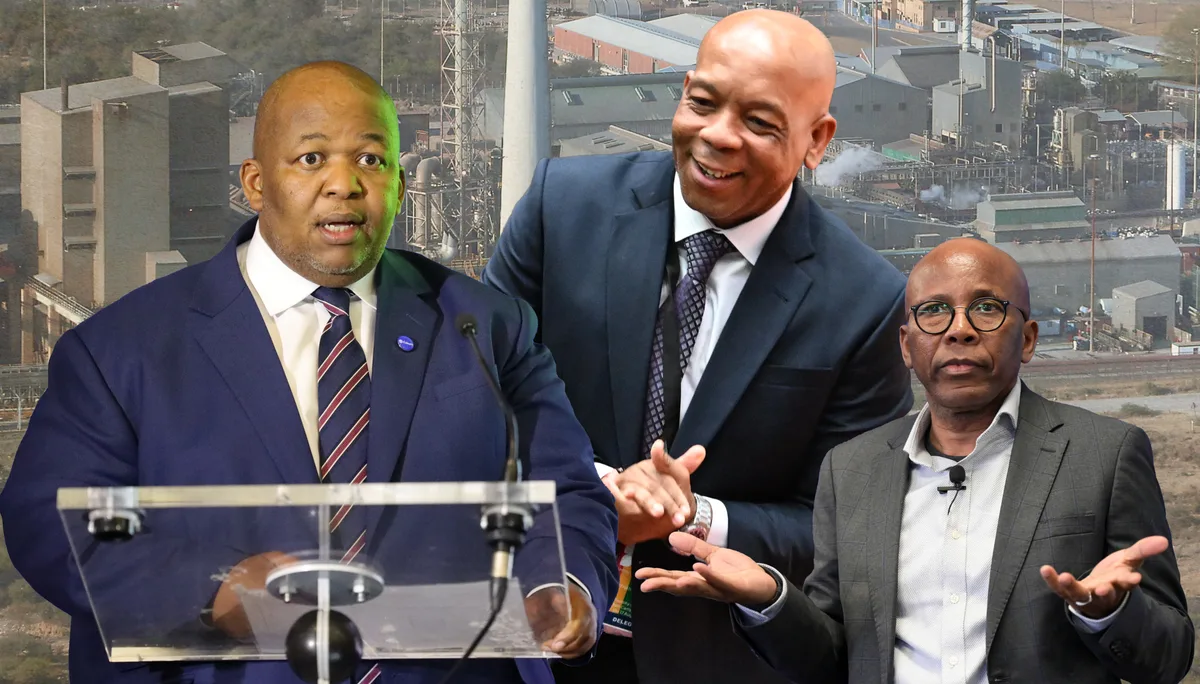
Eskom’s new pricing model looks to decouple the burden of bailing out heavy industry from the the pockets of the general populace and refire the furnaces of the economy.
The minister of electricity and energy, Kgosientsho Ramokgopa, has a proven track record of opening his briefings with a history lesson. On Tuesday, 18 August, he spoke of the 66 smelters that used to drive South Africa’s economy. Only 11 remain operational – 17% utilisation.
Under the new pricing model that he introduced alongside the Eskom dynamic duo of Mteto Nyati and Dan Marokane, that number will rise to 49 by the end of 2027 – 74% utilisation.
In Ramokgopa’s very specific estimate, that level of industrial operation will create and preserve 11,448 direct jobs and 121,392 indirect jobs.
While the government and Eskom are celebrating the policy framework, Transalloys, the last operating manganese smelter in South Africa, offered Daily Maverick an urgent, on-the-ground perspective.
Transalloys had to halt production on 1 July, putting a multibillion-rand investment and 600 jobs at severe risk because it was left out of the discussions that got the ferrochrome smelters their bailout.
CEO Konstantin Sadovnik welcomed the policy focus on the “unsustainable cost of electricity”, but issued a warning regarding timelines:
“Policy direction alone, however, does not address the immediate crisis. We hope that policy discussion would not derail or defer the much-needed and long-overdue practical solution for a sustainable tariff for Transalloys.”
The intervention leverages the existing fiscal framework negotiated with the National Treasury. Eskom CEO Marokane explained that due to the power utility’s improved financial trajectory, the government had tempered its financial support in this year’s Budget speech.
As a result, “The R10-billion that is outstanding from the last tranche of the debt relief programme will be utilised and directed towards this intervention.”
Rather than costing the Treasury, Ramokgopa projects that the preservation and expansion of these tax-paying industries will leave the fiscus “better off by about R5.5-billion” in tax revenue.
Instead, the pricing reform is positioned as the first lever in a broader macroeconomic strategy to reverse South Africa’s deindustrialisation, which saw manufacturing’s contribution to GDP drop from around 22% in the late 1990s to about 12% today.
Ramokgopa sketched out this reindustrialisation vision by stating that Eskom is transitioning from being a constraint to playing a “catalytic role in the South African economy”.
Relying on the government’s critical mineral strategy, he articulated a shift in national economic policy:
5News aggregated this summary from the outlet’s public feed. The full article, with all the context, is on www.dailymaverick.co.za — the content belongs to Daily Maverick.