BULK SAVINGS: How one food stokvel helps 45 North West families fight hunger
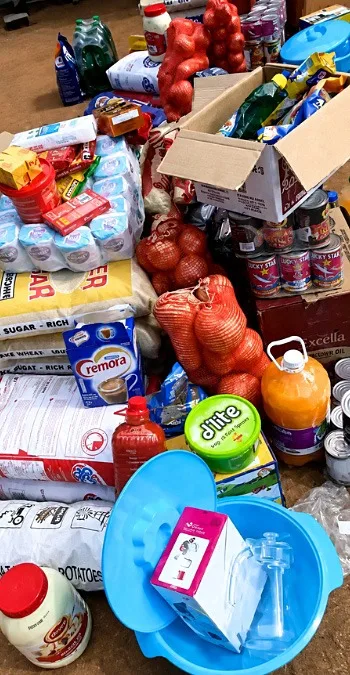
Led by neighbours Mapiti Seleka, Kedisaletse Molefe and Katlego Malgas, the Reabetswe Food Stokvel in Tsetse Village pools R370/month from 45 households so families can buy groceries, toiletries and snacks in bulk.
Every month, Mapiti Seleka puts aside her R370 unemployment grant, knowing that when food prices rise again, she will not have to face this alone.
Along with 44 other households in Tsetse Village outside Mafikeng, she belongs to the Reabetswe Food Stokvel, a community savings group that helps families buy groceries in bulk, stretch limited incomes and put food on the table.
The 41-year-old mother of a six-year-old daughter is unemployed, but married, and says her family manages to buy just enough food and cover other essential expenses with her husband’s small income. She says the stokvel has changed more than how her family shops.
“Now in December, we can also buy juice, biscuits and meat,” says Seleka.
Seleka says that in the past, she relied on her social grant and loans from mashonisas, or informal moneylenders, to help support her family. Three years ago, a conversation with her neighbours, Kedisaletse Molefe and Katlego Malgas, led to the creation of the stokvel.
“We were part of a food stokvel, and I wasn’t happy with the running of it. I felt robbed. Also, the food stokvel didn’t include toiletries and snacks,” says Seleka.
What began in 2023 with three neighbours has grown into a structured stokvel with 45 members.
Members contribute R370 every month towards groceries, meat and snacks, allowing the group to buy food in bulk and stretch household budgets as food prices continue to rise.
Members say the food stokvel helps them feed their families special meals over the December holidays, keep leftover stock for January, when many cash-strapped South Africans struggle to afford food, and even stretch it for several months further.
Seleka says she is now also able to start each new year without the debt she previously incurred over the Christmas period to feed her family.
Stokvels, or rotating savings and credit schemes, are a major part of South Africa’s informal economy.
The National Stokvel Association of South Africa (Nasasa), estimates that there are more than 800,000 stokvel groups with about 11 million members in South Africa, moving more than R50-billion annually.
According to Nasasa, grocery and food-focused stokvel schemes are the most common, alongside burial societies.
5News aggregated this summary from the outlet’s public feed. The full article, with all the context, is on www.dailymaverick.co.za — the content belongs to Daily Maverick.