Inside South Africa’s clean coal programme
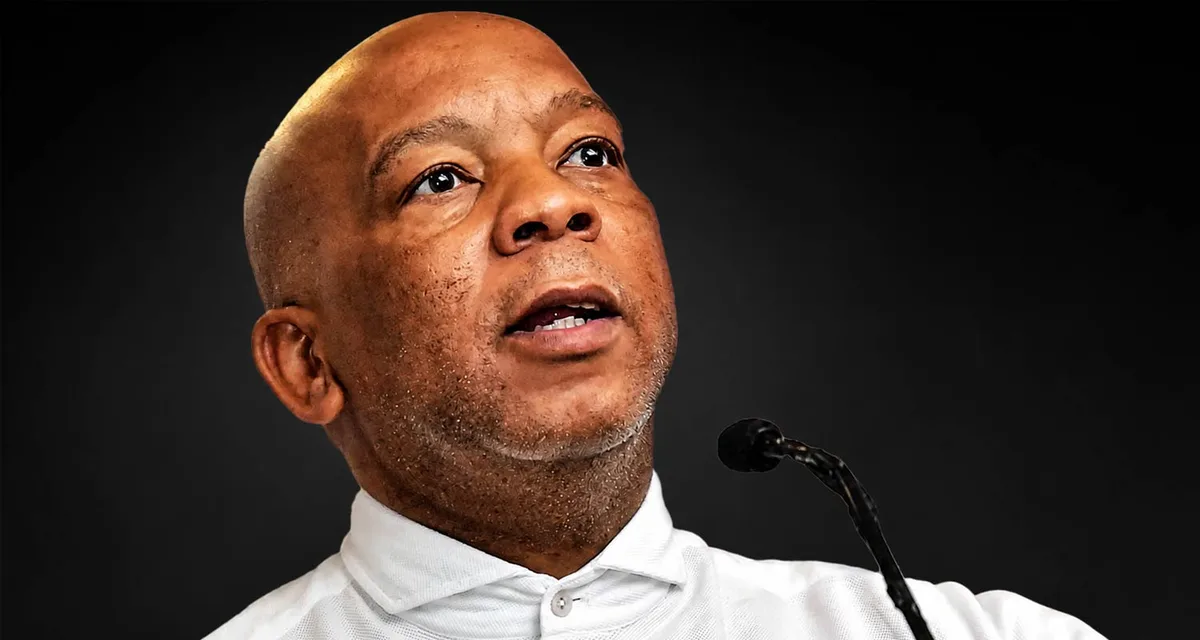
Energy minister Kgosientsho Ramokgopa told a Unisa audience recently that South Africa would keep coal in its mix as the backbone of its cheap energy assets, and that scientists are working on technology that will solve the environmental concerns around coal.
“Because we have a duty and a responsibility to the environment, we’re saying that we are going to apply clean coal technology,” he said at the Graduate School of Business Leadership’s Distinction Dialogue on 13 August, naming the developers as Eskom and the Council for Geoscience. “Science will help us to resolve some of the questions that are confronting us… We’ll test that technology; it will work. Coal is going nowhere.”
The technology is real. However, the picture the CSIR paints of it appears to be more cautious than the minister’s one-line promise.
In a written response to TechCentral, the CSIR set out the status of the High Efficiency Low Emission Circulating Fluidised Bed (HELE-CFB) programme it runs with Eskom, the South African National Energy Development Institute (Sanedi) and the Coaltech Research Association. The partners launched the localisation programme on 1 April 2026 in support of the Integrated Resource Plan 2025, after feasibility work across 2025 and 2026.
Phase 1, the feasibility study, ran from July 2025 to 30 June 2026 at a cost of R7.15-million, co-funded by the four partners. Phase 2 – detailed engineering, procurement, construction and commissioning of a 500kW test facility – is planned for August 2026 to 31 July 2028, “subject to the required phase 2 capital funding being secured”. Phase 3, the demonstration phase, will run test campaigns to about mid-2029.
Only the detailed engineering portion of phase 2 is funded. “A funding gap remains for the construction and demonstration phases, and fundraising efforts are currently under way,” said Setobane Mangena, the CSIR’s executive cluster manager for future production, chemicals. The pilot is expected to cost “tens of millions of rands”, which the CSIR declined to pin down because the work still has to go to tender.
Even when built, the plant will not feed the grid. The 500kW facility, to be hosted at Eskom’s Rosherville site, which already runs a 1MW coal-characterisation test rig, is “a research, testing and validation facility to generate data for future decision-making”. A decision on any commercial-scale unit “falls beyond the current scope of this programme”. Its purpose is to inform South Africa’s post-2030 clean coal policy, as contemplated in the IRP 2025.
The Council for Geoscience (CGS), which Ramokgopa named, is not a partner in the HELE-CFB programme. It works with Eskom on the Leandra pilot in Mpumalanga, which tests whether carbon dioxide can be stored permanently underground – a clean coal technology, but a different one, addressing what happens to the carbon rather than how the coal is burned.
“The HELE-CFB programme focuses on how coal is combusted in order to reduce emissions at source,” the CSIR said. “The Council for Geoscience’s Leandra project, by contrast, focuses on geological storage.”
Leandra is advancing on its own track.
5News aggregated this summary from the outlet’s public feed. The full article, with all the context, is on techcentral.co.za — the content belongs to TechCentral.