Absa expands cashless branches in bid to cut costs
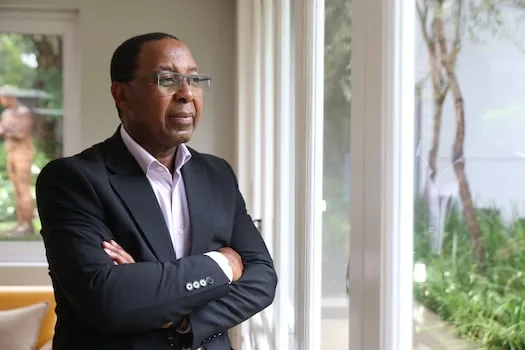
Absa, South Africa’s third-biggest lender, is increasing the number of cashless branches to cut costs as customers increasingly rely less on cash for transactions.
Speaking after the release of the group’s financial results for the six months ended June, Absa CEO Kenny Fihla said cash-dispensing branches were substantially more costly to run than their cashless counterparts.
“We are changing the nature of our branches, moving away from cash branches into more sales consulting-driven kinds of branches. That alone significantly reduces the costs of managing that branch relative to having cash,” he said.
Absa said its “traditional” branches fell by 18% to 359, and the ATM network declined by 2% to 4,976, reflecting the ongoing shift towards digital platforms amid the decline in branch cash transaction volumes.
Banks are moving to cashless banking to mirror customer behaviour, said Pieter van Eeden, Absa’s interim managing executive for integrated channels.
He said that with more customers adopting self-service banking, Absa had increased the number of cashless branches in its South African retail distribution network from 122 to 215, and aimed to expand this to 456 branches over time.
Van Eeden said cashless branches did not mean cashless banking, and customers continued to access cash through ATM networks, cash centres and retail partnerships. “Absa is actively participating in the South African Reserve Bank’s initiative to modernise South Africa’s cash distribution ecosystem , including the exploration of nameless ATMs. We continue to invest in and optimise our ATM network to ensure reliable access to cash and banking services nationwide.”
Standard Bank South Africa’s head of personal & private banking, Kabelo Makeke, said by June 2026 branches that offered cash services only via ATMs increased to 353 including mobile branches.
Elmar Gräter, points of presence COO at FNB, said the bank operates 644 branches nationwide, of which 440 are full-service branches, 203 are tellerless and one is cashless and “will continually increase over the near future based on the adoption of digital banking solutions”.
Fihla said Absa was also speeding up its adaptation of technology, including data and AI, to create scale with minimal impact on jobs.
“While there are structural shifts and changes, those wouldn’t necessarily result in massive retrenchment. If anything, they will give us scalability and the ability to add more volume,” he said.
Cost-cutting measures are one of the levers that Absa aims to use to attain a target of a return on equity of between 16% and 19% in the medium term. Absa’s return on equity was 15% during the period, marginally higher than 14.8% in the prior period.
While there are structural shifts and changes, those wouldn’t necessarily result in massive retrenchment. If anything, they will give us scalability and the ability to add more volume.
The group is also seeking to have higher revenue growth than cost, saying it had “slightly negative jaws”, which was attributed to one-off costs, including restructuring in Kenya and investment in strengthening the leadership.
5News aggregated this summary from the outlet’s public feed. The full article, with all the context, is on www.businesslive.co.za — the content belongs to Business Day.