Kastelo case puts South Africa’s forex rules to the test
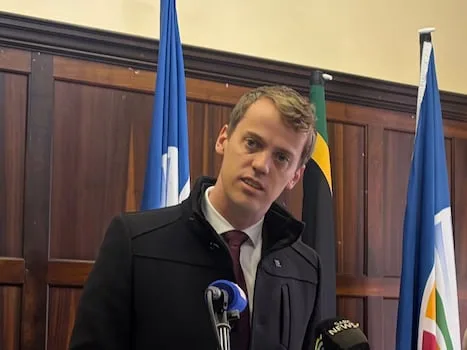
DA finance wizard Mark Burke, just 36, is an accomplished man by all accounts. Armed with a PhD from Cambridge University, he is driven and ambitious; eight years ago he co-founded Kastelo — a fintech start-up that is now in the crosshairs of the South African Reserve Bank over alleged exchange control violations.
Burke was chair of Kastelo until February, when he stepped down just weeks after the firm failed in a high court bid to lift a Bank order freezing its funds in Access Bank. His brother Nicholas is CEO of the fintech.
The central bank froze the Kastelo money in November on suspicion the company had moved about R4bn out of the country unlawfully. The authorities accused it of misrepresenting its business to regulators and designing its business model to circumvent exchange control laws.
Kastelo’s business model included crypto arbitrage — the process of buying and selling cryptocurrencies on different exchanges to take advantage of price differences. Crypto arbitrage itself is not unlawful. It has become a recognised investment strategy to exploit price differences between domestic and foreign crypto markets.
Kastelo has denied wrongdoing, and the Bank’s investigation continues.
“The very business model is suspected of contravening the exchange control regulations,” Andre Malherbe , an investigator in the Bank’s financial surveillance department, says in an affidavit.
“The dominant purpose of the business model is to circumvent the exchange control regulations by facilitating acquisition of foreign currency for Kastelo’s own benefit through the use of third parties without permission from the department.”
The very business model is suspected of contravening the exchange control regulations
Kastelo defended itself in a statement, saying: “We have a track record of licensing and consistent engagement with several regulators regarding our products and services, serving as evidence that we’ve always built offerings which comply with regulations. Our business model focuses on client delight within the laws of South Africa.”
The start-up said most of its clients made no use of their foreign investment allowances and generated no returns from offshore opportunities prior to using Kastelo’s services. “Kastelo enabled them to use their own discretionary allowance to earn returns for themselves on their own investments.”
One of South Africa’s leading commercial law firms, ENS Africa, said in a note on the case that it was an important reminder of the regulatory expectations that apply when new financial products meet South Africa’s exchange control framework.
“South Africa’s exchange control regime allows individuals to move capital offshore through SDA and FIA mechanisms, subject to set limits and regulatory requirements. These allowances are meant to help with legitimate personal foreign investment and expenditure,” the note says.
“They are not designed to create pooled investment structures or to let third parties use an individual’s allowance for commercial purposes.
5News aggregated this summary from the outlet’s public feed. The full article, with all the context, is on www.businesslive.co.za — the content belongs to Business Day.