This transport hub could hold the key to Melbourne’s megacity future
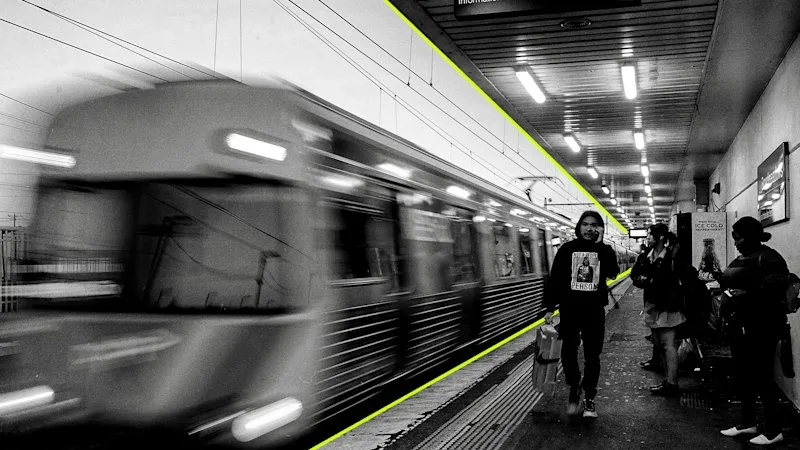
Victoria’s population grows by about one person every four minutes and 40 seconds.
Factoring in births, deaths, international and interstate migration, and the fact most of these people will live in Melbourne, Victoria’s capital is well on the way to becoming a megacity of more than 10 million people by 2101.
To put that in perspective, in the lifetime of a baby born today, Melbourne would need to absorb the population of two Perths.
It’s a confronting reality that puts us on a course matching the likes of New York, Moscow and Shanghai, as about 2000 newcomers make Melbourne their home every week.
If Melbourne continues to allow the city’s footprint to expand, Wallan, Whittlesea, Cranbourne South, Sunbury and Eynesbury would see the biggest population boost by 2101.
However, if we focus growth into established areas, some heritage streetscapes in the city’s inner east will be lost and industrial land around our port, in West Melbourne and Port Melbourne, would have to be transformed into residential hubs.
Population and housing projections from Johnny Barnard, founder of the National Forecasting Program at demographic consultancy Informed Decisions (.id), and commissioned by The Age , show the areas of metropolitan Melbourne that would see the biggest population increases. Use the interactive map above to see how your suburb could change.
This week, The Age has explored the dilemma that housing almost 5 million extra residents, in 2 million more dwellings, would create for the city.
In October, The Age and the University of Melbourne will host Melbourne Assembly , a three-day forum bringing together some of the world’s brightest minds in city planning, innovation, education, arts and sport to discuss ideas for the city’s future.
However we choose to grow Melbourne, a city with a growth rate higher than that of most developed countries, poses challenges for all levels of government and the city’s residents.
Today we ask: Are there alternatives to the way we are handling the growth? Can we do better, and if so, how?
More than seven in 10 Australians live in six state capitals, a phenomenon influenced by the country’s colonial history and the “top-down” establishment of port-dominated settlements that once reported back to imperial London.
European fear of our vast desert interior further marked the coastal capitals as the places to be.
In that sense, the evolution of our cities has been less organic than in many other countries.
5News aggregated this summary from the outlet’s public feed. The full article, with all the context, is on www.smh.com.au — the content belongs to Sydney Morning Herald - National.