A brief history of collage from 12th century Japan to Sydney today – and your own kitchen table
Collage is ancient , with roots going back to the invention of paper in East Asia.
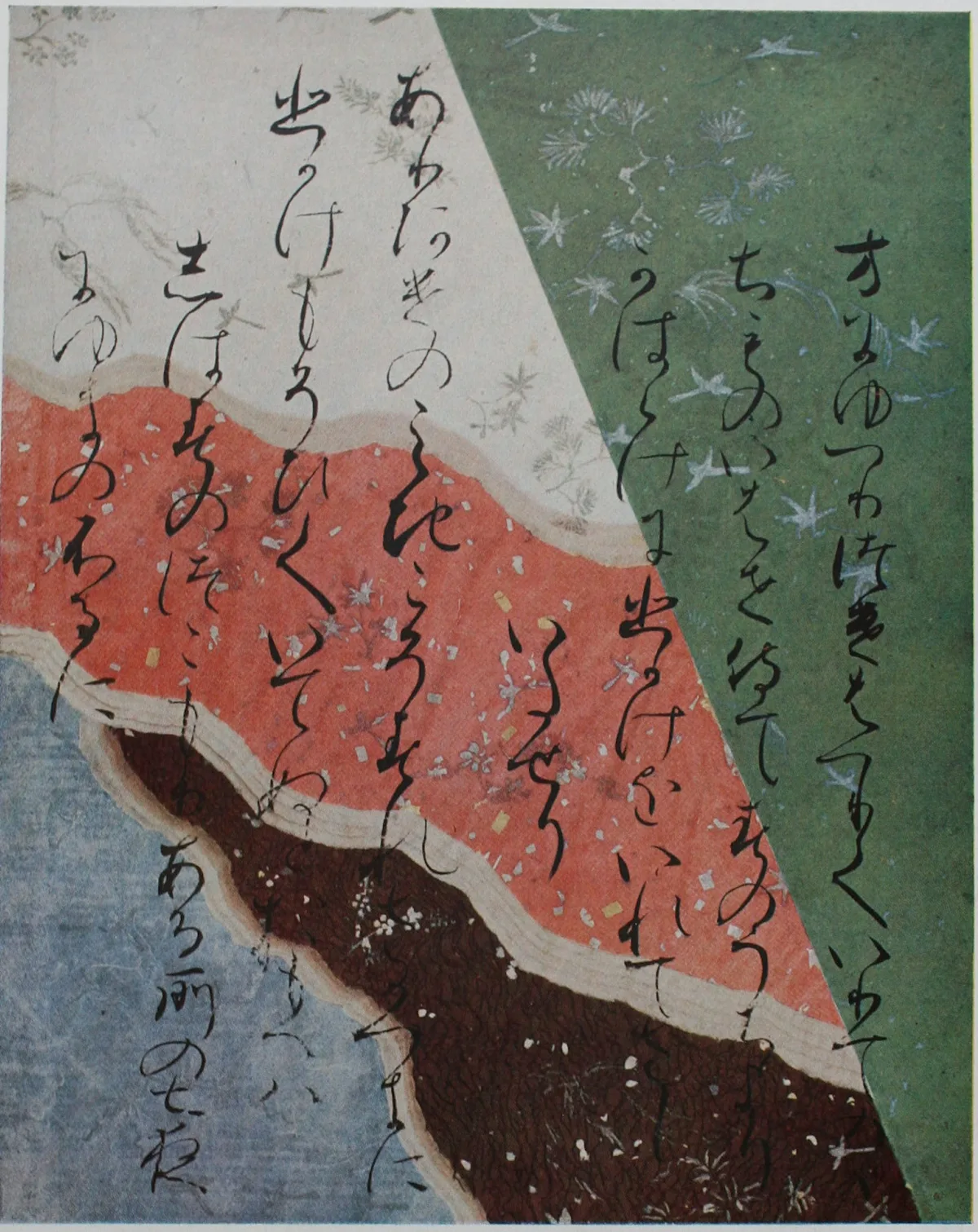
In 12th century Japan , paper was used for calligraphy, and artists pasted different papers, fabrics and torn elements alongside their writing.
They were interested in how calligraphy could be amplified or accentuated through different graphic compositions.
This example of paper from Japan, dating to the 12th century, shows how different coloured pieces of paper were joined together.
Association of Cultural Properties, Tokyo/Wikimedia Commons Paper was introduced to Europe during the late Middle Ages, when texts were painstakingly copied onto paper by hand.
Around 1440, Johannes Gutenberg’s invention of movable type for letterpress printing created a huge demand for paper .
Over the next few hundred years printing on paper spread around Europe.
By 1702, the world’s first daily newspaper was published, the Daily Courant, so cheap it could be thrown away – or, perhaps, used in creative ways – at the end of the day.
The word collage is from the French coller , “to glue” or “to stick together”.
The artform was popularised by European artists in the early 20th century responding to the chaos of war such as George Braque , Hannah Höch and Pablo Picasso .
When they saw newspapers, propaganda posters and flyers, they saw art materials.
Rearranged on a canvas, this work could subvert fascism and critique totalitarian regimes.
Collage is relatively cheap, fast and easy, so it moved between various distinct waves of Modern Art during the 20th century, including Surrealism , Dada , Cubism and Feminist Art .
While artists generally made individual works, it was a technique that was socialised through groups of thinkers and makers.
5News aggregated this summary from the outlet’s public feed. The full article, with all the context, is on theconversation.com — the content belongs to The Conversation Australia.