Are jumping castles safe? An amusement ride safety expert explains
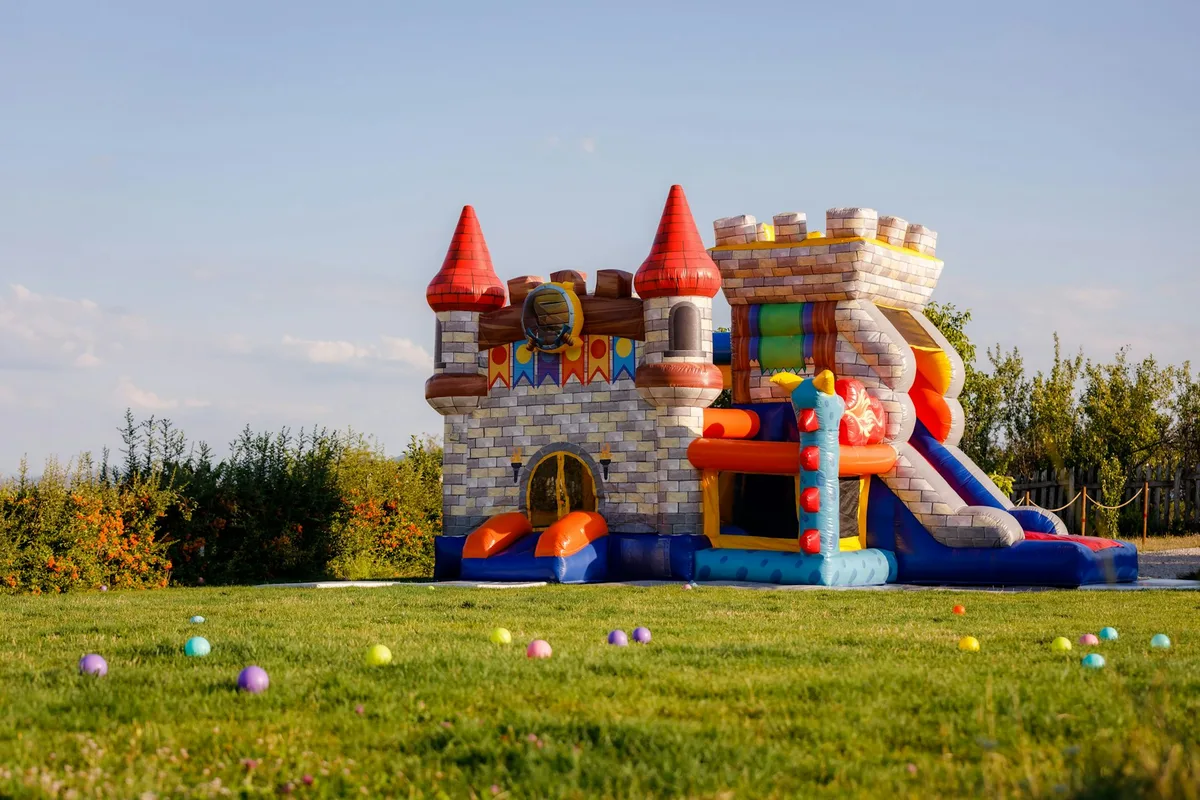
Marko Stojkovic / Getty Images On Saturday, five children were hospitalised after two separate incidents in which jumping castles were lifted into the air by high winds.
In one incident, two children were tossed out of a jumping castle and received upper body injuries at a birthday party near Geelong in Victoria.
In the second incident, in Sydney, two children and an infant were injured.
So should we be worried about letting kids on jumping castles? As an expert in the safety of amusement rides and playground equipment, I can say that jumping castles are for the most part very safe – as long as operators follow the safety rules.
So what are the rules? In Australia, anyone operating an amusement ride needs to comply with the relevant health and safety laws.
This is the Work Health and Safety Act in all states and territories except Victoria, which uses the Occupational Health and Safety Act.
How the legislation is interpreted is slightly different in each state and territory.
However, for inflatable amusement rides they are all essentially the same.
Those state-based regulations in turn may require operators to comply with Australian Standard AS 3533 .
Australian Standards are national technical specifications designed to ensure products, services and systems are safe, reliable and consistent.
Safety requirements for inflatable amusement rides such as jumping castles are set out in Australian Standard AS 3533.4.1:2018 .
Inflatables with a platform height of 3 metres or more must be “plant registered” , which means it has been checked for safety and registered with authorities.
This can be done by certain chartered professional engineers .
In practice, all this means the design and manufacture of a jumping castle needs to comply with the standards.
5News aggregated this summary from the outlet’s public feed. The full article, with all the context, is on theconversation.com — the content belongs to The Conversation Australia.