From bogong moths to Christmas beetles – how to slow down and spot more insects
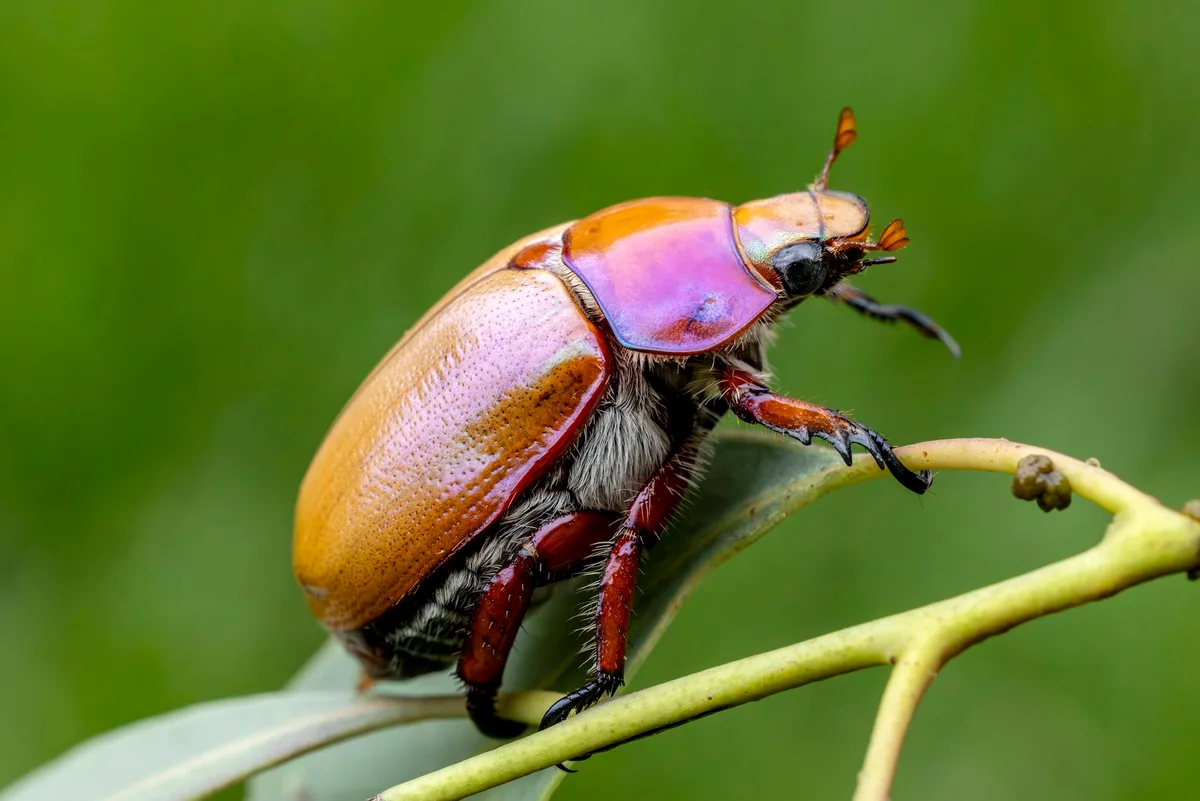
A brightly-coloured Australian Christmas beetle on a gum leaf (pictured at the top of this article).
Ken Griffiths/Getty Millions of people worldwide watched on as the Sydney Olympics came to a close in 2000.
Meanwhile, thousands of bogong moths ( Agrotis infusa ) were airborne, making their annual migration to the Australian Alps .
These bogong moths swarmed in such large numbers that the rain radars showed a storm approaching Sydney.
The bright lights of Stadium Australia, where the closing ceremony was unfolding, had lured them in.
As an entomologist, I’m fascinated by insects.
This year, the bogong moth population has exploded along Australia’s east coast, with people discovering these insects in every nook and cranny of their homes.
The current resurgence offers scientists valuable information about the health and abundance of the bogong moth population.
But they aren’t the only insects worth watching.
Bogong moths ( Agrotis infusa ) embark on a mammoth migration each year.
Andrew Waugh/Getty Bogongs bouncing back Bogong moths are small, brown insects that typically fly at night .
Each year, they embark on a magical migration, travelling up to 1,000 kilometres across Australia.
A clump of bogong moths.
Caitlyn Forster By following the stars , they are able to navigate to the cool caves of the Snowy Mountains in southern New South Wales, where they shelter during the sweltering summer.
5News aggregated this summary from the outlet’s public feed. The full article, with all the context, is on theconversation.com — the content belongs to The Conversation Australia.