SpaceX Christmas Island rocket retrieval small part of Elon Musk’s futuristic quest to dominate the sky
Elon Musk is an ideas man. And, whether you like it or not, some of those ideas will shape the future of humanity.
Before writing that statement off as hyperbole, go visit the website of Space Exploration Technologies Corp., trading as SpaceX, the company Musk founded 24 years ago in California.
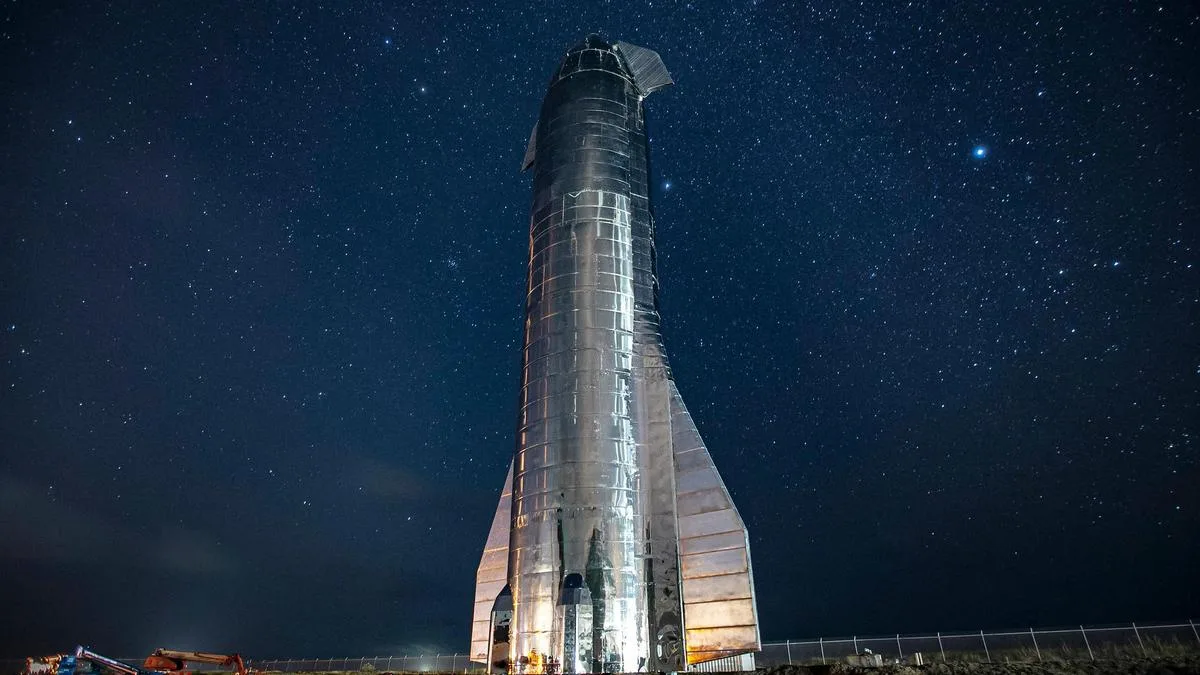
SpaceX is a hot topic of conversation in this part of the world, after the upper stage of one of the company’s Starship rockets was recovered in a dramatic operation off Christmas Island
The 13th Starship test flight lifted off from Starbase on July 24 local time and was never meant to be recovered.
Previous test flights had either not survived the immense heat of re-entry or quickly broken up and sunk in the ocean after a controlled splashdown, but Ship 40 was the first to arrive intact, remain floating and transmitting data back to SpaceX.
Assuming safe passage aboard the heavy-lift vessel Boskalis Forte all the way back to Musk’s Starbase in Texas, Ship 40’s unexpectedly long mission could prove to be a boon for SpaceX’s ambitions to create a reusable rocket program.
Talking about ambitions, it’s hard to imagine the tabs across the top of any other company’s website holding more promise.
In no particular order you’ve got a groundbreaking global communication network, human spaceflight aimed at colonising alien planets, a space-based national security product, artificial intelligence and an initiative designed to spare the Earth from AI’s growing demand on our resources.
Parsing how all of these endeavours fit together, and SpaceX’s chances of successfully pulling them off, is a fascinating exercise.
Determining whether some of them should happen at all is a philosophical one that’s just as important.
Christmas Island locals got an up-close-and-personal look at the upper stage of the largest rocket ever built, which underpins SpaceX’s aspirations amongst the stars.
Unlike the now-defunct NASA Space Shuttle, which required refurbishment at great expense before returning to space, the Starship program is aiming for rapid reuse to make space travel cheaper.
The Starship upper stage and Super Heavy rocket stand 124m tall and are designed to carry 100 metric tons into orbit, and, eventually, a crew of 100 people on long-duration interplanetary flights.
SpaceX will test a Starship lander for potential use in NASA’s Artemis moon mission next year, before a crewed mission to the lunar surface in 2028.
5News aggregated this summary from the outlet’s public feed. The full article, with all the context, is on www.perthnow.com.au — the content belongs to PerthNow.