Housing showdown: Chalmers on budget defence as Liberals warn of market crash
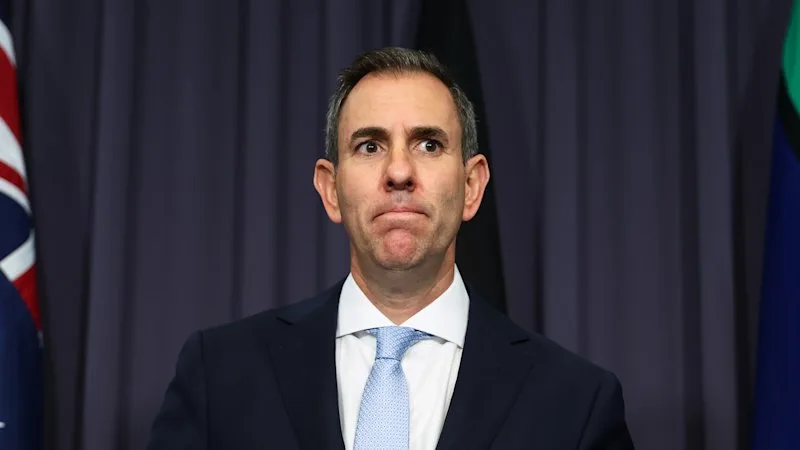
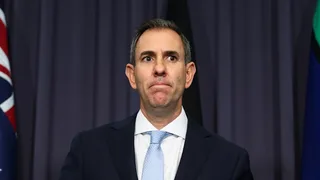
Treasurer Jim Chalmers has defended the government’s changes to negative gearing and the capital gains tax discount after admitting the budget overhaul is contributing to the fall in housing prices, insisting the downturn is temporary and will resolve over time.
After Chalmers fronted a tense press conference in Canberra on Wednesday, Shadow Treasurer Tim Wilson once again accused the government of stoking inflation to raise taxes as the big banks and the Reserve Bank prepare to face a parliamentary inquiry into intergenerational housing inequity.
Treasury modelling in the budget predicted Labor’s changes to housing investment would slow the growth of dwelling prices by 2 per cent. However, drops of 6.7 per cent in Sydney and 6.3 per cent in Melbourne this year and predictions from the Commonwealth Bank of drops as high as 13 per cent have drawn criticism of the modelling.
The Reserve Bank began raising interest rates in February, which began the market downturn, and increased again in March and May.
“The Treasury assumption is over the next couple of years, not the last couple of months. And if you look at movements in house prices over the last couple of decades, it’s not unusual,” Chalmers said on Thursday morning.
“In fact, we think on at least seven different occasions we’ve seen house prices come off, and that’s because they react to things like interest rate movements, like developments in the global and domestic economy.”
Chalmers told ABC radio the government’s changes were part of a “range of factors at play” in the recent market downturn, adding that housing was a long-term investment that should not be tracked month-to-month, and that he was “not necessarily” surprised by the recent decline in prices.
Over the last five years the median house sales price has increased by 34.8 per cent, from $701,000 in mid-2021 to $940,000 last month, according to data published by property analytics firm Cotality.
“There are movements and volatility in house prices over time,” Chalmers said. “Overwhelmingly, over the past quarter-century, we’ve seen very quick house price growth that has locked a lot of young people out of the market, and that’s the challenge that we’re addressing.”
Wilson was on the attack following Chalmers’ appearance, arguing the government had deliberately orchestrated a crash in the housing market and was stoking inflation to collect more tax revenue.
“Their active inflation agenda is focused on stoking revenue, stoking inflation, then taxing the inflation, then spending the inflation, because they know that it’s a pathway to sneak more tax from Australian hip pockets into their own revenue,” Wilson told ABC radio.
“While we’re seeing wealth of Australians decline for those who own their own home, we’re seeing the price of first homes increasing as a consequence of tax policy and tax measures, and failure to build new homes. We’re seeing a smashing in the confidence of the market. But let’s remember this is by design.”
While the value of cheaper homes was resilient in the immediate aftermath of the budget, data from Cotality published on Tuesday showed values had softened.
5News aggregated this summary from the outlet’s public feed. The full article, with all the context, is on www.watoday.com.au — the content belongs to WAtoday.