175 years of university architecture reflects Australian history. We shouldn’t let that history be lost
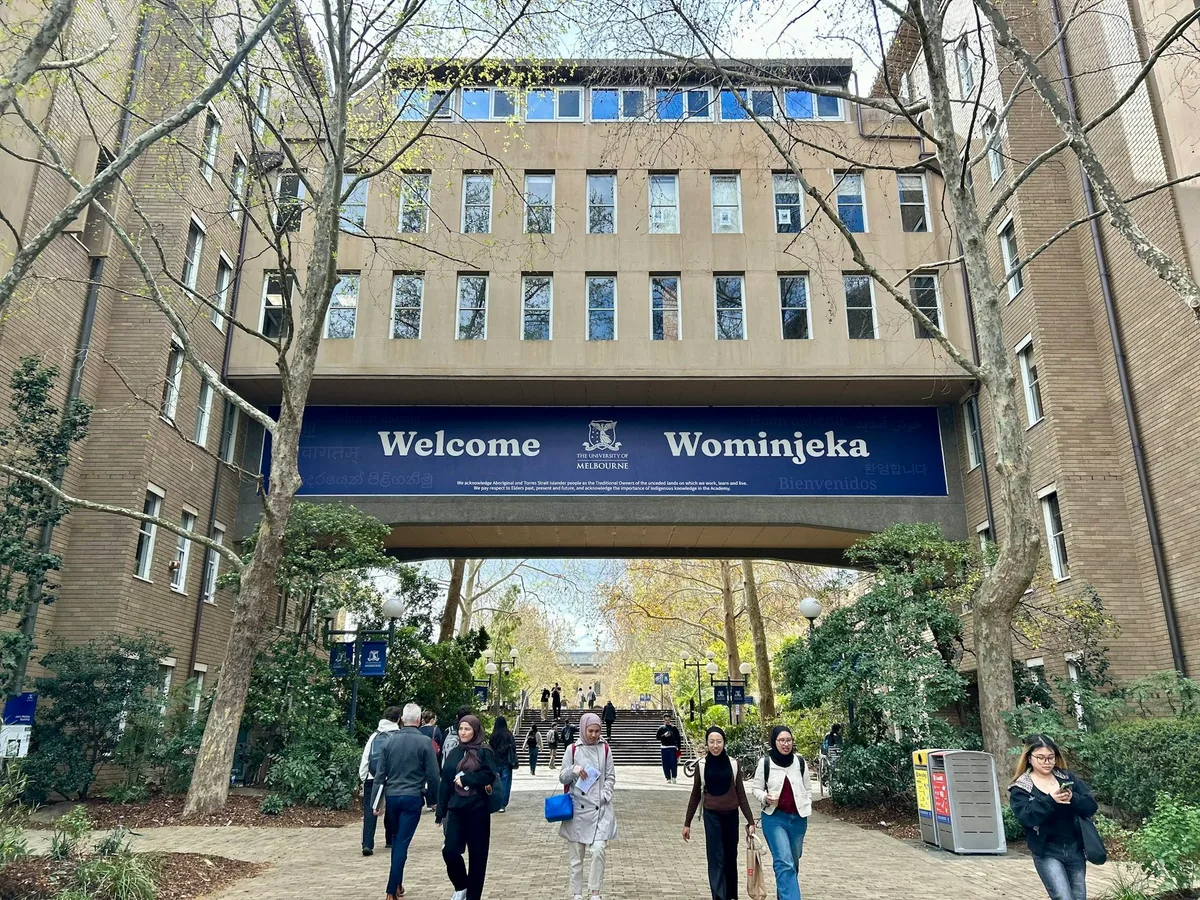
The John Medley Building at the University of Melbourne, opened in 1971.
Cath Kaylor/The Conversation Half a decade ago, Australian universities were thrust into an international experiment in online learning and working.
Suddenly, bricks and mortar campuses seemed redundant.
Today, campus spaces and buildings are being called on to rapidly adapt again.
With a return to in-person teaching due to the impact of artificial intelligence on assessing learning , making our physical campuses welcoming and appealing is back in the spotlight .
Successive eras of building and campus planning have reflected the changing needs and aspirations of Australia’s universities.
They clearly display the layers of architectural and landscape styles that have also shaped our cities and suburbs.
However, some institutional leaders, planning consultants and architects appear to be dissatisfied with aspects of the campuses they have inherited.
The changing shape of Australian universities The “sandstone” universities, those like Melbourne and Sydney established in the 19th century, were built on a cloistered model inherited from the United Kingdom.
They were inward-facing, self-consciously refined and anxious to demonstrate their links to British models of learning .
Australia’s ‘sandstone universities’, like the University of Sydney, were modeled on British institutions.
National Museum Australia In the postwar decades, these influences gave way to planned modernist environments with new civic ambitions .
The campuses at Flinders, Newcastle, La Trobe, Murdoch and Macquarie used a material palette of raw concrete and unpainted brickwork.
They cultivated distinctively Australian landscapes that spoke to a more democratic access to higher education .
5News aggregated this summary from the outlet’s public feed. The full article, with all the context, is on theconversation.com — the content belongs to The Conversation Australia.