Why is NZ spending far more on responding to climate disasters than on reducing future risk?
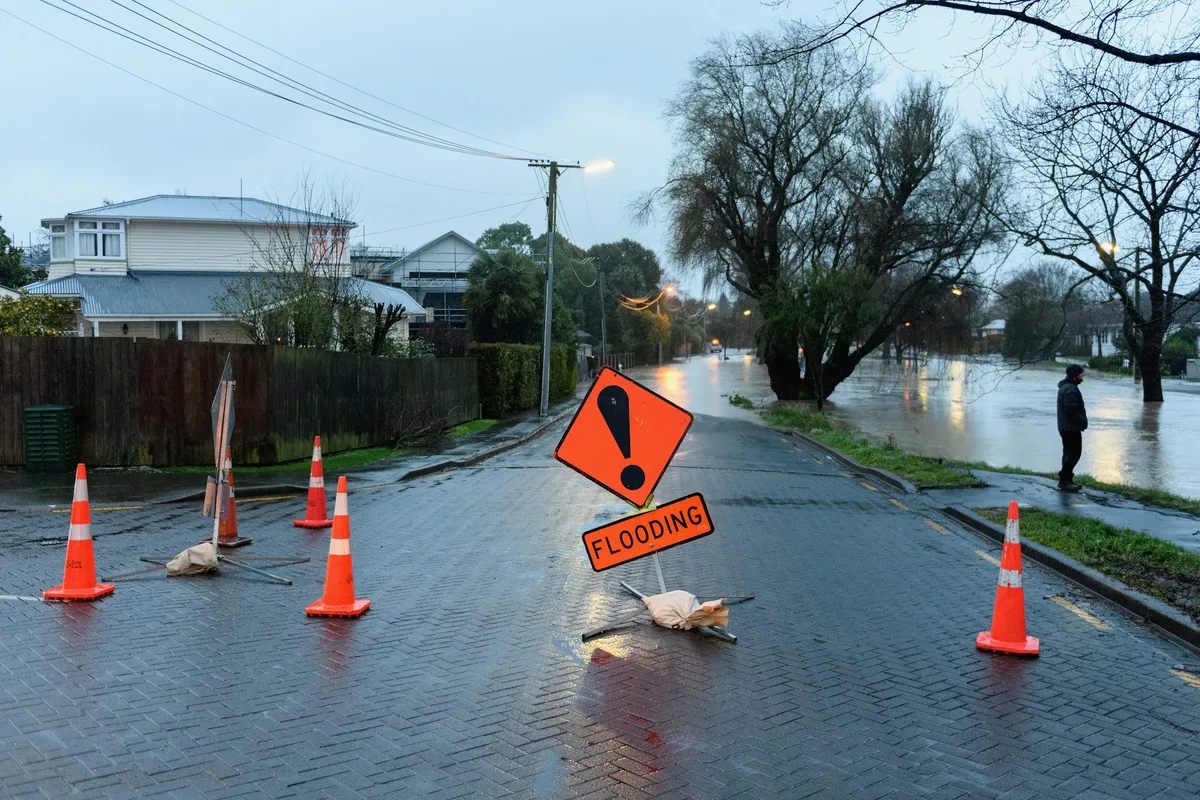
Kai Schwoerer/Getty Images New Zealand is not on track to adapt to growing climate risks, nor is it cutting emissions quickly enough, according to the latest reports issued by the Climate Change Commission.
Last week, the commission published an evaluation of progress on New Zealand’s adaptation plans , arguing that communities are exposed to greater risk of damage and costs while the government continues to delay decisions about who should pay.
Earlier this year, the commission pointed out that 97% of the government’s spend on natural hazards since 2010 has been on responding to and recovering from disasters, with only 3% going towards reducing future risk.
Its latest report warns that the present course risks making things worse.
Here are two examples of the challenges councils and home owners are already facing.
In South Dunedin, about 6,000 houses are at risk of flooding and sea-level rise this century.
Following lengthy community engagement, seven possible responses have been developed, ranging from pumping water to large-scale retreat.
They cost between NZ$2 billion and $10 billion and would save varying numbers of homes.
The council has now asked for another more engineering-based response (pumps and seawalls) to be added.
But the commission warns such responses may constitute “maladaptation” and calls for clearer direction and support from the government.
Another example is insurance.
Premiums have risen sharply since January 2023, when Auckland experienced one of New Zealand’s worst floods.
In flood zones, some people (perhaps 4%, the commission estimates) cannot get insurance at all.
But “ insurance retreat ” – when people cannot afford to fully insure their home – is potentially worse.
5News aggregated this summary from the outlet’s public feed. The full article, with all the context, is on theconversation.com — the content belongs to The Conversation Australia.