Is the Pope a Catholic? Yes, but that’s where the certainty ends
You've used all of your gift articles. 3 more will become available on the 1st of every month.
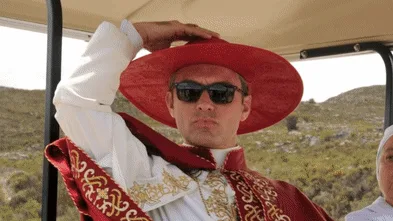
There are many unlikely papal moments in Paolo Sorrentino’s 2016 series The Young Pope : the Pope emerges from under a pile of babies, the Pope tames a kangaroo, the Pope spies on a couple having sex in their living room. Still, none is more unbelievable in these times than the Pope insisting that his face be hidden from the public.
“I do not have an image because I am no one,” says newly elected Pope Pius XIII (Jude Law). If he must appear it will be as “a dark shadow, [a] silhouette”.
Pius name-checks Banksy, JD Salinger and Daft Punk – “the most important figures in their respective fields” – none of whom let themselves be seen. “The Vatican survives on hyperbole,” he says, “So we will give them hyperbole. But this time in reverse.”
He has a point. The Pope is famous despite, not because of, his face. Take an ordinary man, dress him in a white pellegrina and zucchetto, add a chunky pectoral cross and you have the kind of instant recognition very few living people command. We’re talking Elvis Presley or Dolly Parton-level recognition from silhouette alone.
It’s this instant identification that makes the Pope such an effective vehicle for dramatic or comedic intervention. In Italian satirist Pierfrancesco Diliberto’s new film Holy Cannoli ( Che Dio perdona a tutti ) the protagonist, Arturo, eats so much sugar in one hit that he hallucinates the Pope (Carlos Hipólito) is in his living room. The absurdity, the wonder and the inclination to actually listen when the apparition speaks come almost entirely from the instantly identifiable costume, at least to begin with.
As the film goes on, it becomes clear that this is a fictionalised version of the late Pope Francis, but he could just as easily be an entirely invented character. His role in the film is to guide atheistic Arturo in his quest to be worthy of his devoutly Catholic girlfriend. For this, he does not need to be an actual Pope; he needs to be both a symbol of official Christianity and benign father-figure who will appeal to the audience regardless of religious belief.
The actual Pope also performs that role, of course, though his perceived benignity and appeal are far from universal. They also differ fairly dramatically depending on the specifics of the man in the costume. An Economist survey in June found the current Pope Leo XIV had the highest favorability rating among all the public figures polled, coming in a whopping 54 percentage points higher than the US president. The Public Religion Research Institute points out that his predecessor, Pope Francis, had even higher ratings at the same point in his papacy, and both have been consistently seen more favourably than Pope Benedict XVI.
So the Pope is a symbol, yes, but he’s also a person.
5News aggregated this summary from the outlet’s public feed. The full article, with all the context, is on www.brisbanetimes.com.au — the content belongs to Brisbane Times.