Origin Energy data breach: Bank and ID details stolen from 900,000 customers
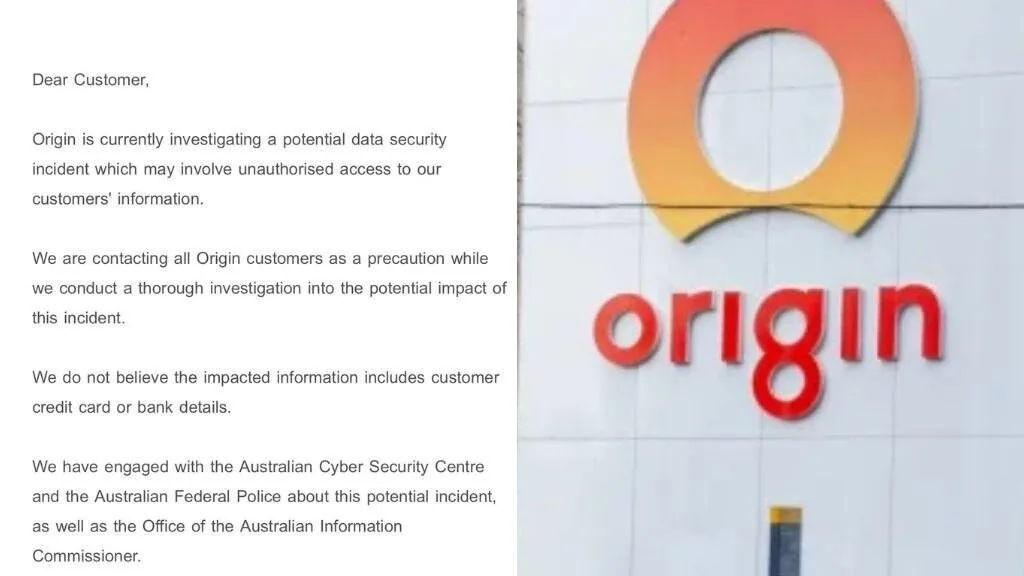
Bank details, ID documents, and government concession numbers are among the highly sensitive information exposed in the Origin Energy hack that impacted about 900,000 customers.
Up to 15,000 people had numbers associated with government concessions or schemes taken in the July 2 data breach.
Sixty had their full bank account numbers stolen and another 100 had information from identifying documents taken.
Origin initially said customers’ affected data may include their name, address, dates of birth, phone numbers, and account information, along with the last four digits of a credit card or last three digits of a bank account.
Incomplete credit card or bank account information cannot be used to make purchases or access accounts.
Earlier this week, it was revealed authorities traced the Origin Energy cyber hack to a Manila call centre.
Origin chief executive Frank Calabria said the energy provider was confident in the steps they had taken to respond.
“We have substantially completed our review into the information accessed for each affected customer, and our priority is completing our notifications to them and providing support,” he said.
“We have taken a number of steps to enhance the security of our systems to prevent future incidents of this kind.”
In late July, the energy giant confirmed 900,000 current and former customers’ personal information had been hacked.
This is lower than initial reports that two million of Origin’s 4.8 million customers were involved.
Origin chief executive Frank Calabria confirmed on Tuesday that the hacker first contacted the energy giant on July 2.
Origin Energy is urging customers to remain alert to any phone call, text or email they receive even if it appears to be from the energy provider, a person’s bank or govermnet.
They are also asking customers to use basic online security measures including two-factor authentication and not to provide personal details online with anyone.
5News aggregated this summary from the outlet’s public feed. The full article, with all the context, is on www.perthnow.com.au — the content belongs to PerthNow.