NASA’s new telescope will transform our view of the universe. This is the story of its namesake
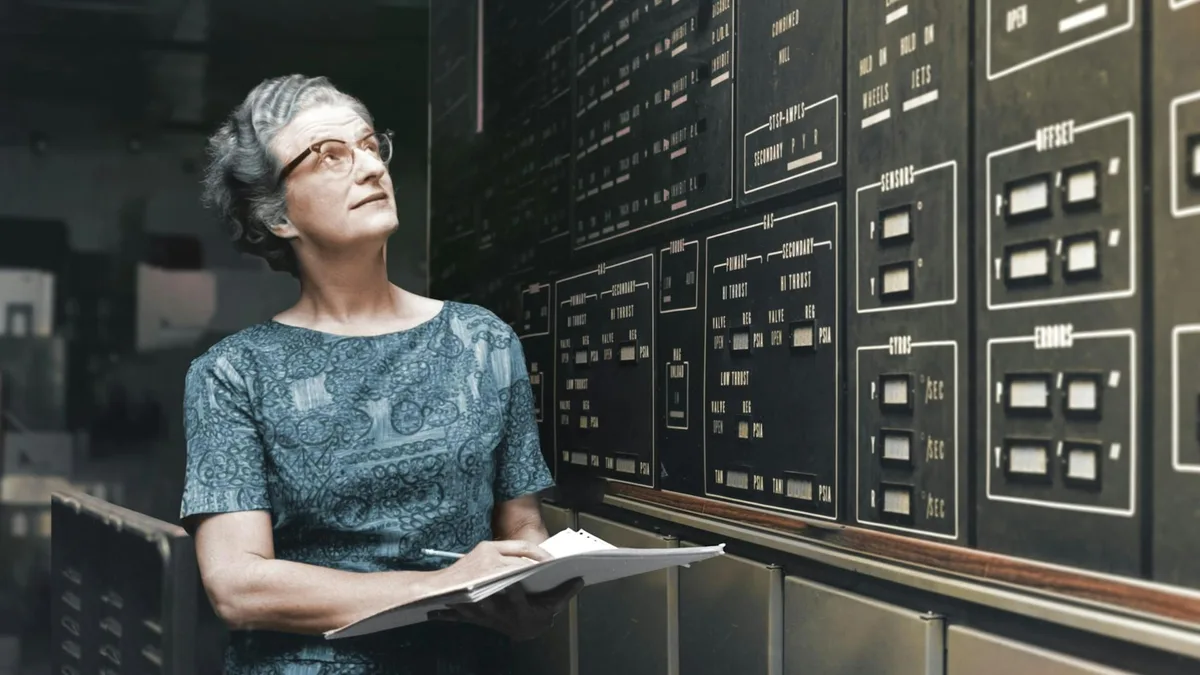
Nancy Grace Roman, NASA's first chief of astronomy.
NASA/ESA The Nancy Grace Roman Space Telescope is set to launch this weekend aboard a SpaceX rocket from the Kennedy Space Centre in Florida.
When it becomes operational early next year, it will transform our view of the universe .
With a mirror the same size as the one in the Hubble Space Telescope but a field of view over 100 times larger, NASA’s newest tool is designed to survey vast swaths of sky quickly.
It will hunt for dark energy’s fingerprints and detect perhaps 100,000 exoplanets.
In August 2018, just four months before she died on December 25, I had the great fortune to fly from Sydney to Washington DC to interview the woman this telescope is named after.
She was 93-years-old and over the hours we spent talking, she shared with me her remarkable life story.
A childhood passion for the stars Nancy Grace Roman was born on May 16 1925 , in Nashville, Tennessee, and grew up captivated by the night sky.
Her mother, Georgia Frances Smith Roman, encouraged this early curiosity, walking with her young daughter to point out constellations and the aurora borealis.
By age eleven, Nancy Grace – never Nancy! – had already organised an astronomy club among her classmates in Reno, Nevada, where the family briefly lived.
By high school she had decided, against the advice of nearly everyone around her, that she wanted to become a professional astronomer.
That ambition ran headlong into the sexism of 20th century academia.
When Nancy Grace asked her high school guidance counsellor for permission to take a second year of algebra instead of yet more Latin, the counsellor reportedly asked her , “What lady would take mathematics instead of Latin?” She took the maths anyway.
She went on to Swarthmore College, where she earned a bachelor’s degree in astronomy in 1946, and then to the University of Chicago, where she completed a PhD in astronomy in 1949.
5News aggregated this summary from the outlet’s public feed. The full article, with all the context, is on theconversation.com — the content belongs to The Conversation Australia.