I bought my seven-year-old daughter a squishy toy. Now, she’s fluent in therapy-speak
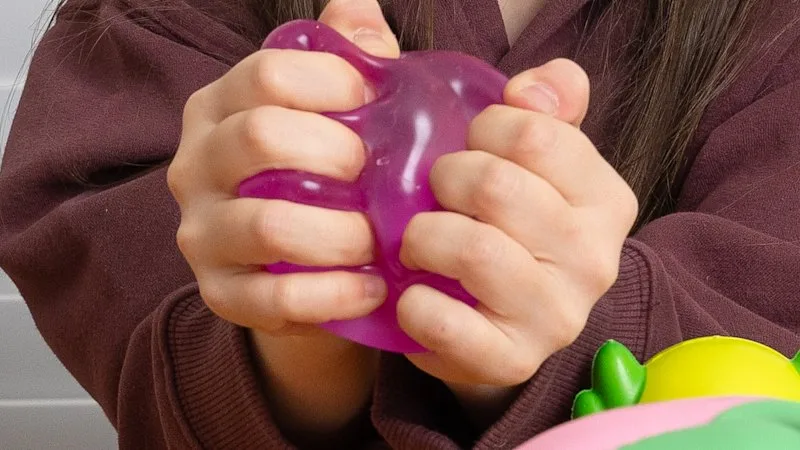
Nothing says “modern parenting” like watching your seven-year-old’s heart break over an exploded squishy full of radioactive goo. I finally caved and bought my daughter a “dumpling squishy” from the $2 shop. You know, the viral fidget toys keeping Border Force busy . (Note: they’re not $2. Small ones are $8. Large ones are obscenely pushing $45 and are kept behind the counter like ciggies.)
Her joy was boundless: it was like Taylor Swift had dropped by on Christmas morning with a bunny. After an hour of my daughter’s ecstatic kneading, the thing burst while we were in the car. Her face crumpled into unbearable anguish as I briefly debated calling the fire brigade to handle the toxic spill while yelling at her not to touch anything.
I drove to the nearest $2 shop to buy another one because I couldn’t handle her Shakespearean-level despair, even if we’d just narrowly avoided a crash. “Why do you like them so much?” I asked her as we left the $2 shop. “It helps me regulate,” she said.
My jaw dropped. I have battled anxiety for most of my adult life, so I’m hardly anti-coping mechanisms. My cupboard is filled with enough “calm” herbal teas and supplements to subdue an entire carriage of Sydney commuters in peak hour. Some help; others are just placebos in nice packaging. What I never expected was to see “managing anxiety” turn into a consumerist boom for kids, to the point where even kids who don’t have anxiety, like my daughter, are now fluent in therapy-speak. Toys aren’t just toys any more; they’re “coping mechanisms” that help them “regulate”.
Fidget toys have become a ubiquitous sight in Australian classrooms. What started as tools for a small minority of kids with diagnosed needs became a near-universal must-have. And why wouldn’t they, when these shiny, glittering toys are spreading like a super-cute virus through schools? I’m certain that if her fellow students started bringing in emotional support carrots, my daughter would develop a clinical need for one by recess.
One Reddit user in a forum for Australian teachers described being sick of fidget toys and attempted to teach year 2 students to “ twiddle their thumbs ”. A worrying number couldn’t do it, which is funny in a bleak sort of way. The great undiagnosed of us got through the old-school ways: biting nails down to the bed, chewing on hair and twiddling our thumbs. Not always hygienic, but at least we weren’t exposed to goo that could be classified as a chemical weapon.
Let’s be honest: a toy is a toy. I’m no occupational therapist, but when a dumpling squishy becomes a tool to “regulate”, even in the eyes of kids who don’t need it, we are medicalising boredom. This is concept creep at its finest and most sinister, with an added price tag .
In an age of soaring mental health labels, everyone is hunting for a cause: phones, parenting, pandemics. What gets spoken about less is the possibility that we are manufacturing the problem as we name it.
5News aggregated this summary from the outlet’s public feed. The full article, with all the context, is on www.brisbanetimes.com.au — the content belongs to Brisbane Times.